10 Flower Nails Ideas for Stunning Nail Art Inspiration
There’s something about flower nails ideas done right — not the chunky acrylic rose kind, not the generic daisy sticker — that makes you pause mid-conversation just to look at your own hands.
This isn’t a roundup of ten ways to paint a petal. Every idea here is built around a specific visual moment — a composition choice, a placement detail, a material you probably haven’t thought to use — that separates a nail that’s pretty from a nail that gets photographed. If you’ve ever scrolled past a flower nail and thought “that’s not it,” this is for you.
Who This Look Is For Flower Nails ideas
Flower nails aren’t a seasonal thing — they live year-round, but they mean different things depending on how they’re executed. A pressed pansy under glass reads completely differently than a graphic black-line peony. One belongs at a garden party in June; the other belongs at a gallery opening in November. Both are flower nails.
1. Ghost Petal
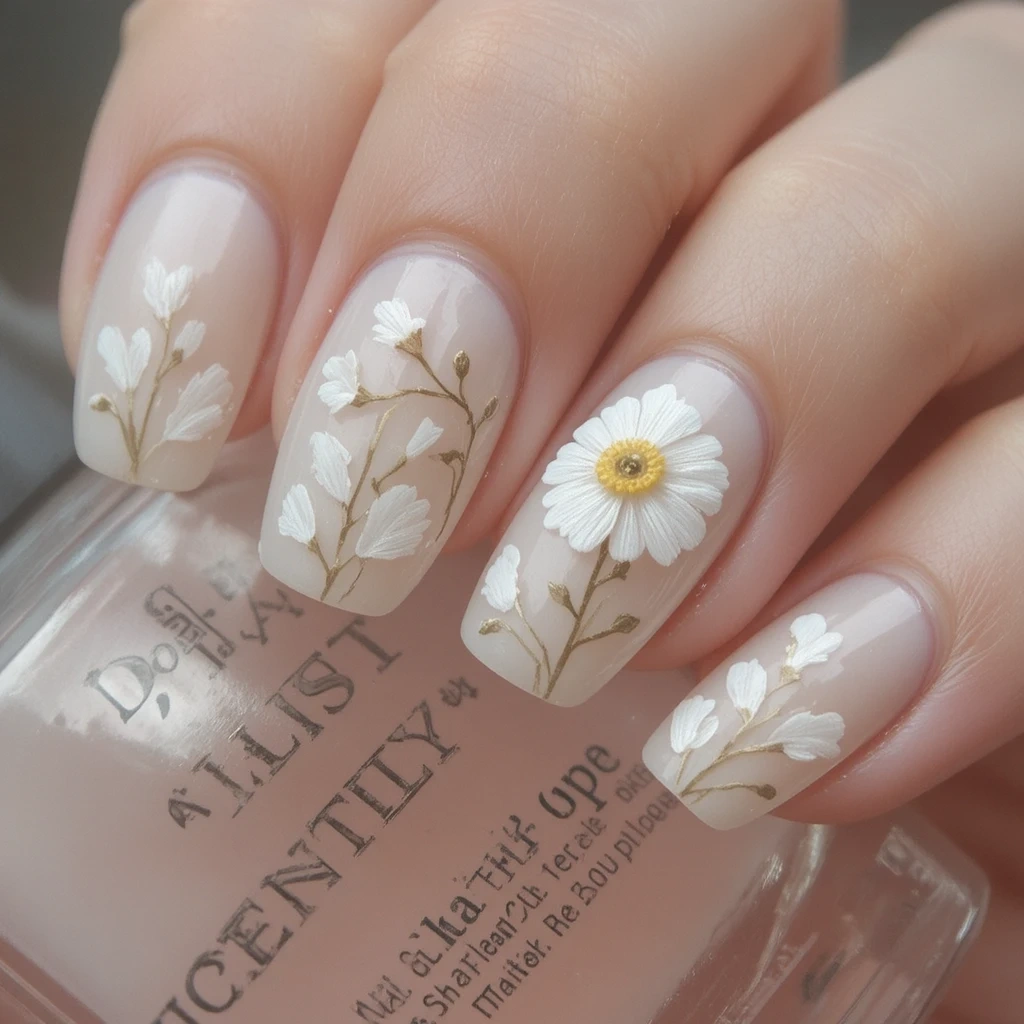
The base is a barely-there sheer ivory — the kind that reads almost skin-like from a distance, with just enough milkiness to show. On one nail only, a single white poppy is painted using a dry-brush technique: the petals are translucent at the edges, slightly denser at the center, so the whole flower feels more like a watermark than a painting. The finished nail looks like something pressed behind frosted glass, botanical and quiet.
Mood / Aesthetic: Pressed herbarium, early morning light
Difficulty: Intermediate
Best For: Someone who loves the idea of flower nails but finds most versions too loud for everyday wear
What Makes It Pinterest-Worthy: The translucency of the petals against the sheer base — it photographs like a ghost of a flower, which is far more interesting than a fully opaque one
Product Spotlight: Orly Breathable Treatment + Color in “Bare Naked” ($12, Ulta) — this specific formula has the semi-opaque milky quality that makes the sheer base look intentional rather than underdone, and it’s thin enough that painting over it doesn’t create bulk at the edges.
2. Single Stem, Wrong Nail
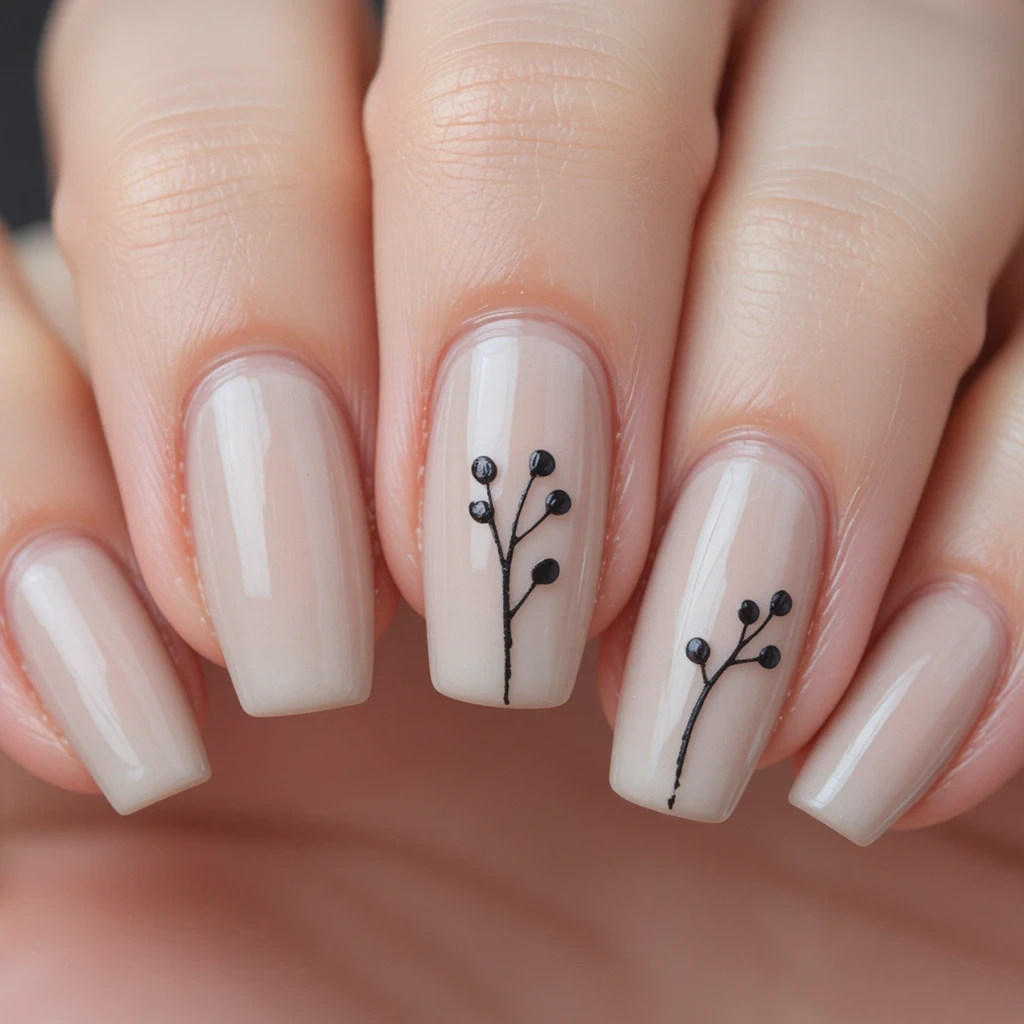
A soft greige base — warm, a little dusty, the color of old linen — on all five nails. On the ring finger only, a single botanical stem is painted in thin black gel: one straight vertical line with three small leaves branching off, nothing more. No flower at the top. The stem just ends. The finished look is quieter than any full floral design and somehow more considered for it.
Art Direction Note: The stem runs from the base of the nail almost to the tip — vertical and slightly off-center, which makes it feel hand-drawn rather than stamped. The absence of a flower is a deliberate art direction choice: it suggests a botanical illustration mid-sketch, which is more visually interesting than a completed one. One nail, one mark, four neutral companions.
Mood / Aesthetic: Dark academia, notebook sketches, September
Difficulty: Beginner
Best Nail Shape: Coffin or almond — the length gives the vertical stem room to read without feeling cramped
Best For: Someone who wants art on their nails without committing to anything that reads as “decorative”
What Makes It Pinterest-Worthy: The deliberate incompleteness — a stemless stem is an unexpected, slightly melancholy detail that makes people look twice
Product Spotlight: Beetles Gel Polish Ultra-Thin Liner Brush ($8, Amazon) — the bristles come to a near-single-hair point, which is what makes the leaf lines look like they were drawn with a pen rather than a brush. Wobble on a wider brush is always visible; this one forgives imperfect hands.
3. Fogged Violet
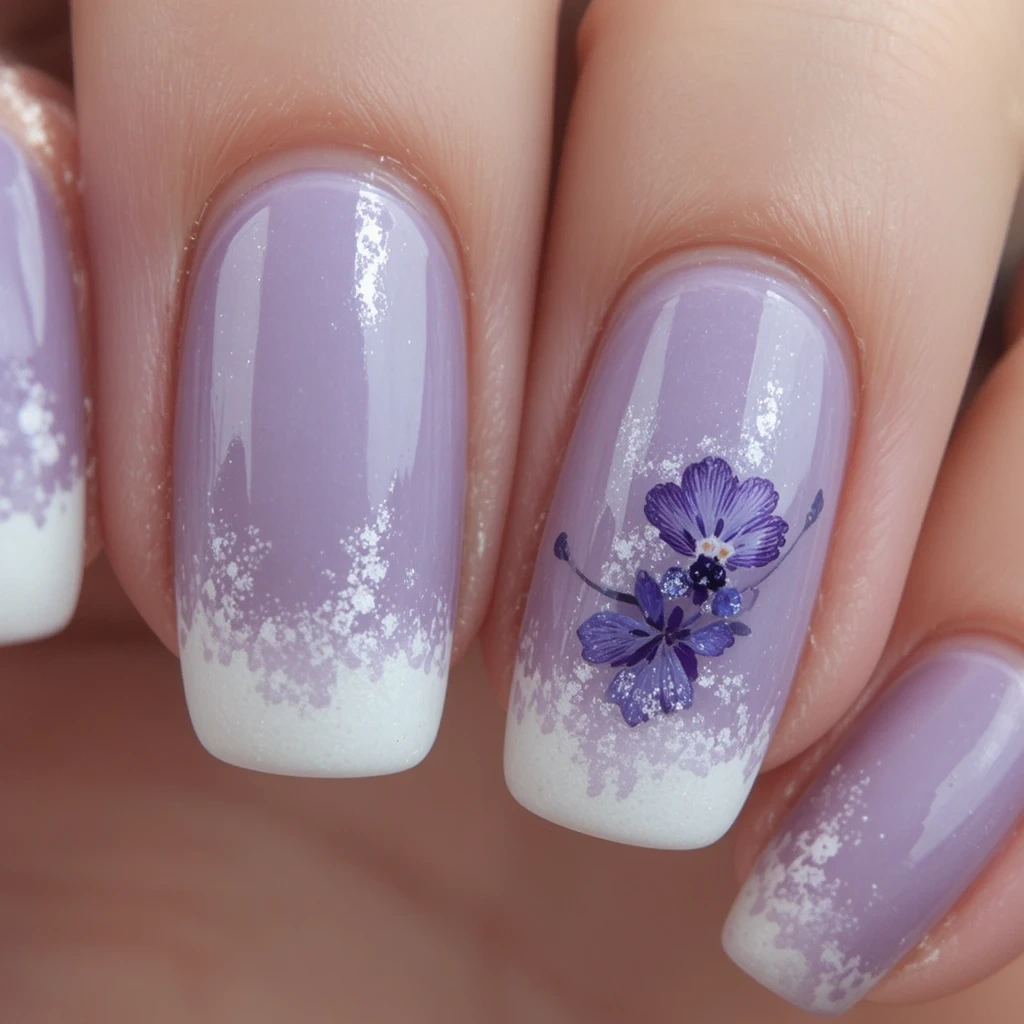
A dusty lavender base — not bright purple, specifically the kind that reads gray from far away and violet up close — with a fine mist of white gel stippled at the tips using a dry sponge. On two nails, a single violet flower is painted in a slightly deeper shade of the base color, so it reads as tonal and subtle rather than contrasting. The whole set looks like something fading at the edges.
Art Direction Note: The tonal approach — flowers painted in a shade close to the base rather than in contrast — means the art reveals itself slowly. Someone has to look closely to see the florals. That quality of gradual discovery is what makes the set feel editorial rather than decorative. The white mist at the tips softens the shape of the nail itself, which is an underused trick.
Mood / Aesthetic: Dried lavender bundles, late August, French countryside without the cliché
Difficulty: Beginner
Best Nail Shape: Round or squoval — the soft shape of the nail complements the deliberately hazy composition
Best For: Everyday wear for someone who finds most floral nails too precious
What Makes It Pinterest-Worthy: The tonal painting technique — the flowers nearly disappear into the base, and that restraint photographs beautifully
Product Spotlight: Sally Hansen Miracle Gel in “Laven-Darling” ($12, Target) — this specific shade hits the exact dusty-lavender-almost-gray tone that makes the tonal floral technique work. A brighter purple reads too sweet; this one reads like a mood.
For When You Want to Be Noticed
Bold, considered, built for the moment
4. Midnight Garden
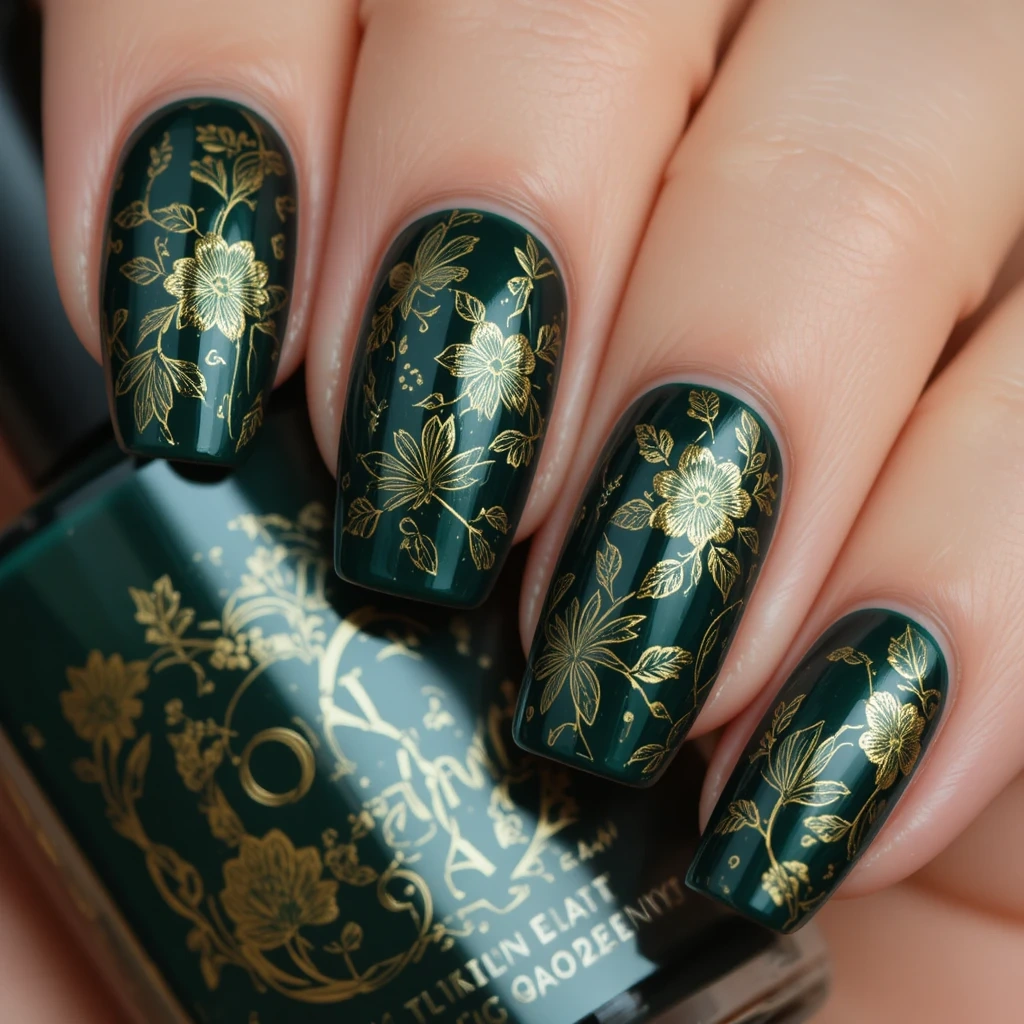
A deep forest green base — almost black in low light, unmistakably green in daylight — with fine-line florals painted across the nail in gold gel. The flowers aren’t realistic; they’re graphic and slightly stylized, the kind you’d find in a William Morris textile. The gold lines are thin enough that the overall effect reads rich rather than loud, and the darkest nails have the most detail while two are left as plain deep green.
Mood / Aesthetic: Jewel-toned Victorian, November dinner party, emerald velvet
Difficulty: Advanced
Best For: An event where your hands will be visible: holiday gatherings, a formal dinner, anything with candlelight
What Makes It Pinterest-Worthy: The gold-on-dark-green combination reads as genuinely luxurious, and the asymmetric placement makes it look like something was designed, not just repeated across every nail
Product Spotlight: Maniology Stamping Polish in “24K” ($10, maniology.com) — stamping polishes are specifically formulated to stay opaque in extremely thin application, which is how you get gold lines that read crisp rather than streaky over a dark base. Regular gold polish applied this thinly goes patchy.
5. Cherry Blossom at Dusk
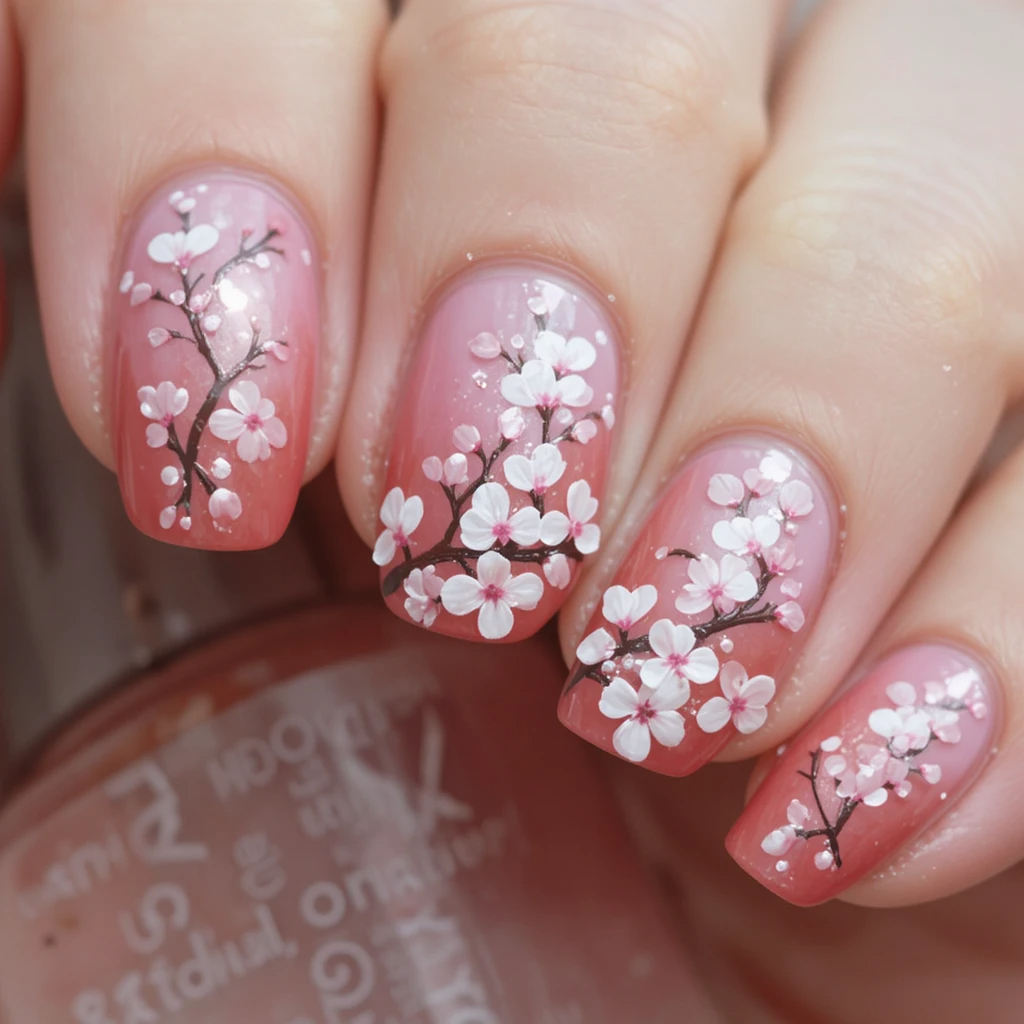
A gradient base that moves from a warm champagne at the tip to a soft terracotta pink at the cuticle — the color of the sky right before it goes dark. Against this, cherry blossoms in white and pale pink are clustered at the cuticle end only, using a dotting tool for the petals so each flower is slightly imperfect and organic-looking. Thin brown branches extend from the cluster, fading as they travel toward the tip.
Mood / Aesthetic: Japanese woodblock print, sakura season, golden hour
Difficulty: Intermediate
Best For: Spring events, a wedding, any occasion where you want something that reads as considered without being costume-like
What Makes It Pinterest-Worthy: The deliberate bottom-weighting of all the art — cherry blossoms growing from the finger rather than sitting on the nail — is compositionally unexpected and immediately striking
Product Spotlight: Winstonia Dotting Tool Double-Sided Set ($7, Amazon) — cherry blossom petals done with a dotting tool look more naturally uneven than petals painted with a brush, and uneven is exactly right here. The dual-size heads let you vary petal scale within the same cluster.
6. Pressed Peony, One Nail
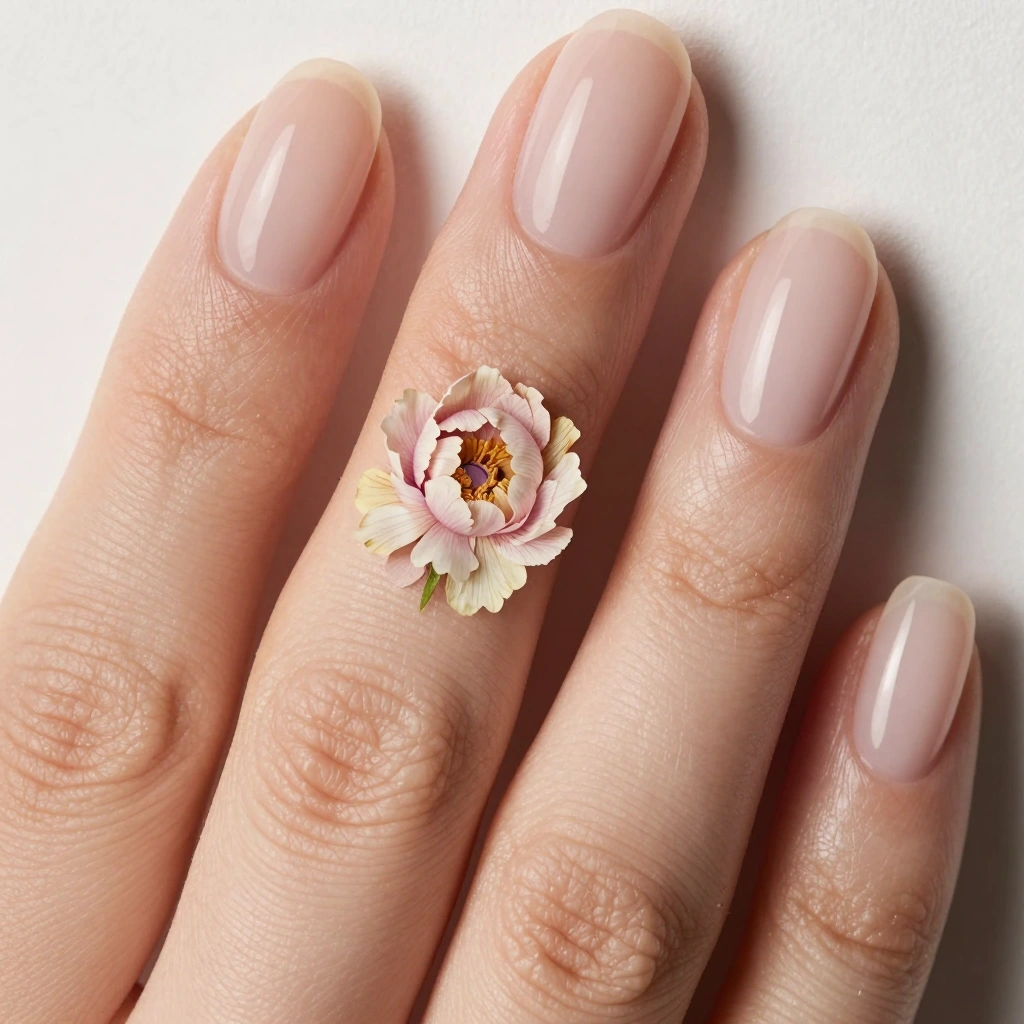
Four nails in a clean warm nude — the kind that almost disappears against the skin. On the middle finger, a pressed peony petal (real, dried) is placed flat on tacky gel before topcoat and sealed under a thick layer of glossy gel. The petal sits slightly raised under the topcoat, and you can see every vein and texture. The rest of the set is completely bare of art.
Mood / Aesthetic: Natural history museum, preserved specimens, quiet luxury
Difficulty: Intermediate (sourcing and placing the dried petal is the skill required, not painting)
Best For: A wedding manicure for someone who finds traditional bridal nails too sweet
What Makes It Pinterest-Worthy: An actual pressed flower sealed into a nail is genuinely unexpected — it photographs like jewelry and looks like nothing that came out of a bottle
Product Spotlight: Modelones Poly Extension Gel in “Clear” ($14, Amazon) — thick enough to fully encapsulate a dried petal without cracking or leaving visible edges, and self-leveling enough that the surface stays smooth even over a slightly textured botanical. Thin topcoats will crack over time where the petal edge creates a ridge.
7. Ink Wash Peony
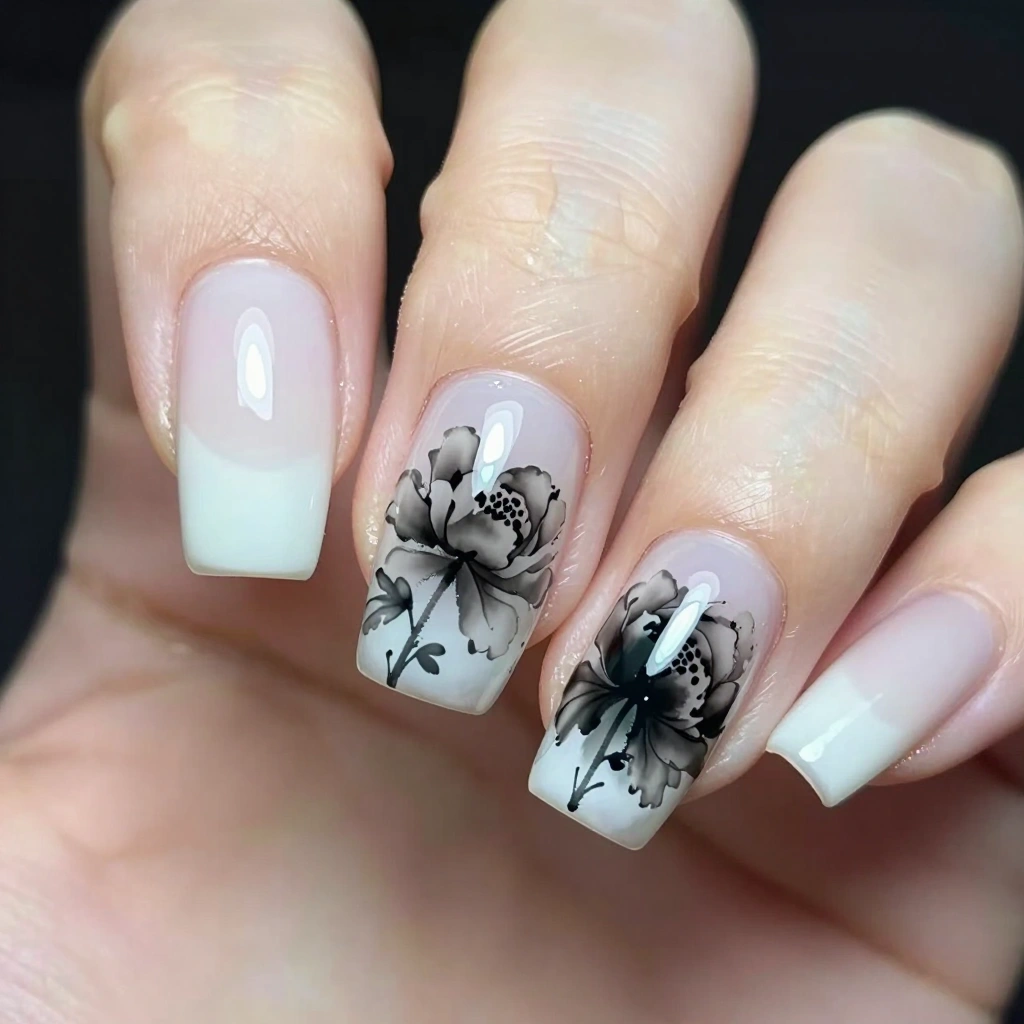
A bone-white base. On two or three nails, a peony is painted in ink-wash style using highly diluted black gel — the colors move from a near-black density at the center petals to a barely-there gray at the outermost layer, so the flower reads like a Chinese ink painting scaled down to fingernail size. The negative space of the white base becomes part of the composition, standing in for the lightest petals.
Mood / Aesthetic: Sumi-e brush painting, still mornings, monochrome editorial
Difficulty: Advanced — diluting gel evenly and controlling the wash without it going patchy requires practice
Best For: Someone who already owns neutral clothes and wants nails that function as art rather than accent
What Makes It Pinterest-Worthy: The ink-wash dissolution technique — a flower that seems to be fading into the nail rather than sitting on top of it — is immediately distinct from every other floral nail
Product Spotlight: Gellen Gel Nail Polish in “Smoky Gray” ($9, Amazon) — this specific shade can be diluted with gel cleanser to achieve a true transparent wash consistency without losing the pigment entirely the way black gel tends to. You need a color with enough grey in it that dilution reads as intentional tone, not accidental pallor.
8. Gold Leaf Magnolia
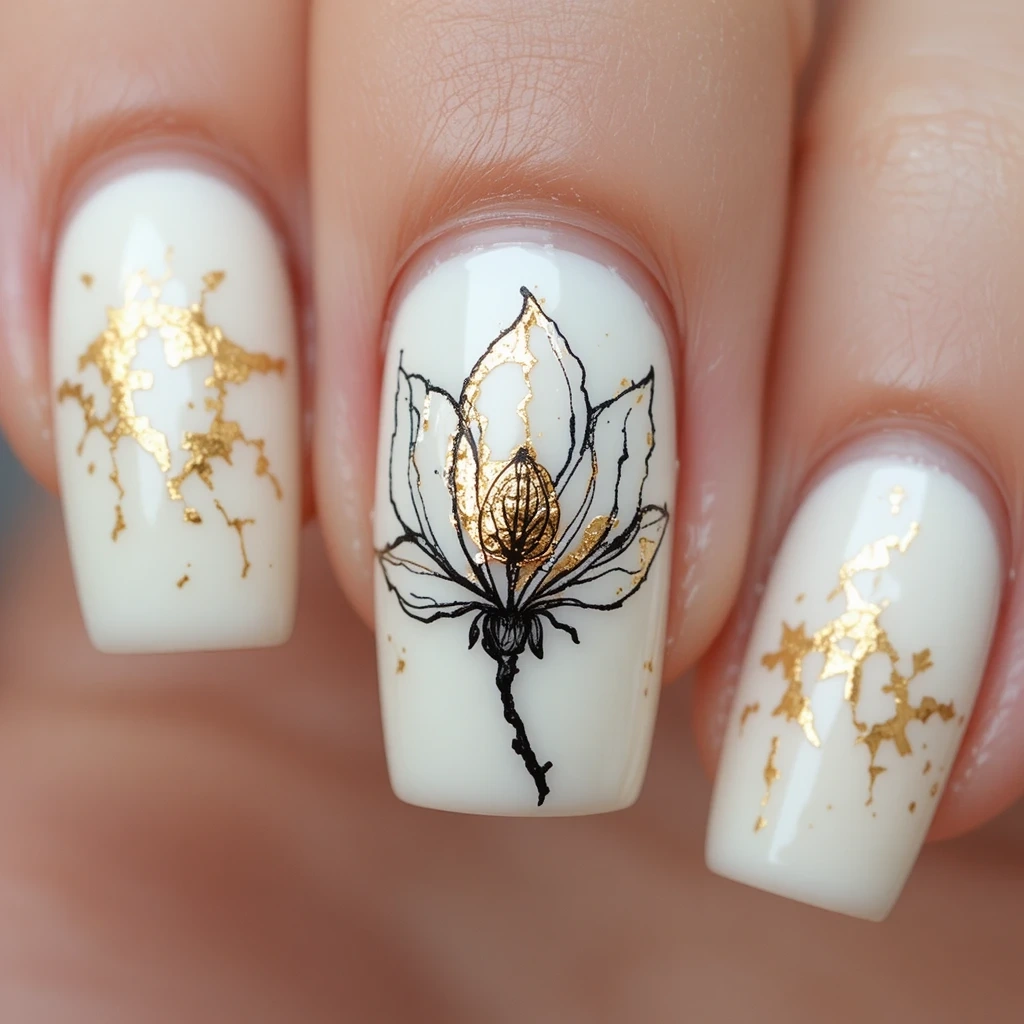
A cream base — specifically a warm off-white, not bright white. On the accent nail, a magnolia is sketched in fine black gel lines: loose, not technically perfect, more like a contour drawing than a filled illustration. The petals are then filled in partially with real gold leaf applied in torn fragments, so the coverage is uneven and organic — some petals fully gold, others barely touched. Where the gold meets the black line, there’s a crackle effect.
Mood / Aesthetic: Antique Japanese lacquerwork, illuminated manuscripts, Parisian auction house
Difficulty: Advanced
Best For: A gallery opening, a winter party, any occasion where something slightly gilded makes sense
What Makes It Pinterest-Worthy: Real torn gold leaf on a nail photographs with a warmth and texture that no metallic polish can reproduce — you can see that it’s a real material, and that materiality is the visual hook
Product Spotlight: Mia Secret Gold Leaf Sheets ($8, Amazon) — the sheets are thin enough to tear cleanly into organic-edged fragments without crumbling, which is what you need for the irregular placement to look intentional rather than like a mistake. Craft store gold leaf is often too thick and tears with rough edges.
9. Botanical Negative Space
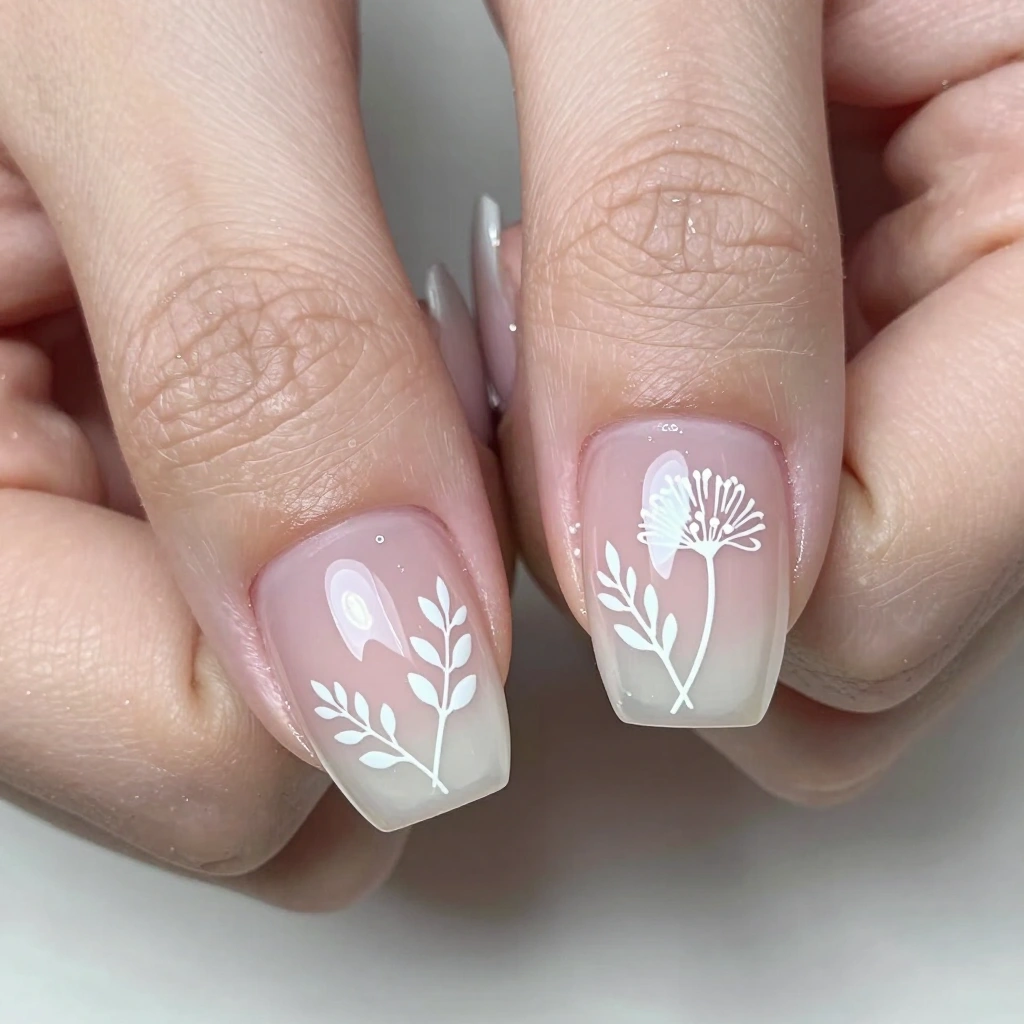
A clean, hard gel overlay with no polish color — completely transparent, so the nail plate itself is the “base.” On two nails, fine-line botanical illustrations are painted directly on the bare nail plate in white gel: thin stems, small leaves, a flower head. The negative space is the nail’s actual surface, and the illustration floats on top of it.
Mood / Aesthetic: Scientific botanical illustration, morning light, research notebook
Difficulty: Intermediate
Best For: Everyday wear for someone who loves the idea of nail art but finds any opaque base color too commitment-heavy
What Makes It Pinterest-Worthy: White illustration on a transparent base is compositionally unusual — the nail itself becomes the canvas in a literal sense, and the design makes that visible
Product Spotlight: Apres Gel-X Clear Tips ($18, Amazon) — if you want the cleanest possible transparent base, gel-x extensions give a more uniformly clear surface than a bare natural nail, which can have ridges or discoloration. The illustration reads much more precisely on a flat, consistent background.
10. Dead Roses in Deep Red
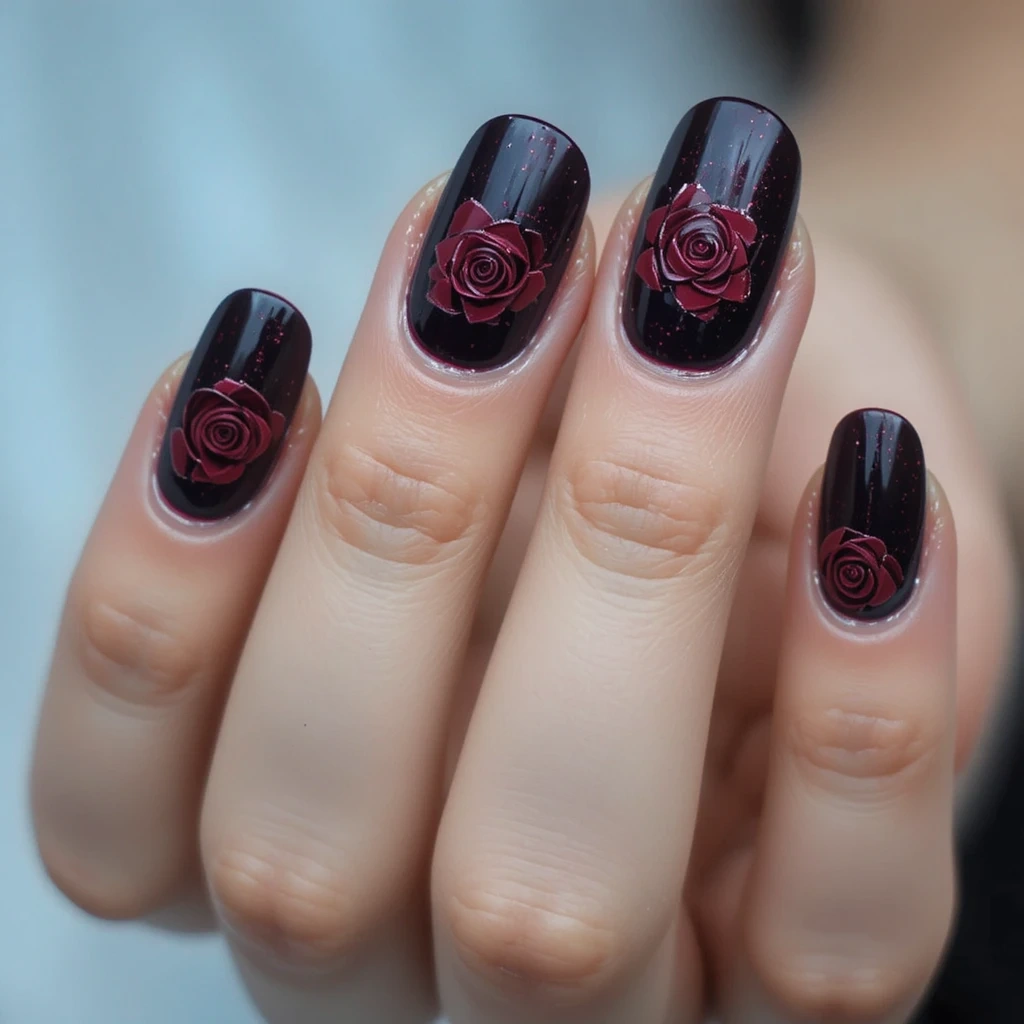
A near-black burgundy base — so dark it reads black until it catches light and reveals its red. On the ring and middle finger, a rose is painted in slightly lighter burgundy gel using a dry-brush technique: the petals are suggested rather than fully rendered, with most of the detail at the center and the outer petals breaking into thin strokes that fade. The roses look wilted. That’s intentional.
Mood / Aesthetic: Gothic romance, dried bouquet left too long, November
Difficulty: Intermediate
Best For: Fall and winter months, or any time you want a set that reads as deliberately moody
What Makes It Pinterest-Worthy: The light-reveal quality of tonal-on-dark painting — a design that shows more of itself depending on how you’re holding your hand is genuinely surprising and endlessly photographable
Product Spotlight: OPI Gel Color in “Malaga Wine” ($18, salon supply stores) — this specific shade sits in the exact register of dark-wine-not-quite-black that makes tonal painting on a dark base visible. True black-based reds have no tonal range to work with; this one has just enough red saturation that a lighter mix of the same hue reads as a separate value.
Honest Pros & Cons
✅ Flower nails work across every skin tone — the range of base colors and illustration styles means there’s a version that reads beautifully on every complexion
✅ The scale of the canvas actually works in your favor for botanical illustration — a flower rendered this small has an almost jewel-like quality that a larger version wouldn’t have
✅ The range is genuinely enormous: the same “flower nail” concept can read gothic, minimalist, maximalist, bridal, editorial, or everyday depending entirely on execution
✅ Real botanical materials (dried petals, gold leaf) are inexpensive to source and the effect is dramatically more interesting than anything painted
✅ The tonal-on-dark designs read as neutral until the light hits them, which means they’re more work-appropriate than they photograph
❌ Fine-line hand-painted florals chip fastest at the illustration edges — a wobbly line that chips even slightly reads as broken rather than worn, so longevity is genuinely shorter than solid-color nails
❌ Pressed botanical nails can lift at the edges of the petal over time, especially if the gel layer wasn’t thick enough to fully encapsulate it
❌ The designs that look simplest — one stem, one accent nail — are actually the least forgiving, because there’s nowhere to hide a mistake when the whole composition is three lines
❌ Finding a nail technician who does the ink-wash or fine-line painting to a standard worth paying for is genuinely difficult in most cities; this isn’t a skill every salon has
❌ The darker tonal designs (the dead roses, the midnight garden) require a specific lighting environment to show their best qualities — overhead fluorescent office lighting will flatten them to near-black solids
FAQs
Can I use regular nail polish instead of gel for the pressed botanical designs?
You can, but the seal won’t hold as well — dried petals need a thick, rigid topcoat to stay embedded without lifting, and regular polish topcoats are too thin and flexible to achieve that. If you’re committed to no-gel, use a resin-style topcoat like Seche Vite ($9, Ulta) applied in multiple thick layers, and accept that it may lift sooner.
How do I dry pressed flowers at home for nail art?
Place fresh petals between two sheets of parchment paper inside a heavy book and leave them for two to three weeks. Violets, pansies, and small rose petals work best because they press flat without significant thickness. Avoid thick, fleshy flowers — they retain too much moisture and will brown under topcoat.
Is there a stamping plate for the fine-line botanical style, or does it have to be hand-painted?
Stamping is an option and it’ll get you cleaner lines if painting isn’t your strength. Bundle Monster and Moyou London both make botanical stamping plates in the $10–15 range (Amazon, nail art supply sites). The limitation is that stamped designs have a specific look — slightly more graphic and uniform — that reads differently from hand-drawn. Whether that matters depends on the specific design.
Will dark base colors (like the deep burgundy) stain my natural nails?
Dark gel polishes shouldn’t stain if you use a proper base coat first — Orly Bonder ($12, Ulta) forms a physical barrier that prevents pigment transfer. Regular dark polish on bare nails is a different story; that will almost always stain, and burgundy is one of the worst offenders. Always use base coat, especially with any red-based dark shade.
Closing
The difference between a flower nail that looks like a craft project and one that looks like art almost always comes down to one decision: what isn’t there. The negative space, the plain nails, the deliberately unfinished stem, the petals that fade before they’re complete. Restraint is the technique most people skip, and it’s the one that does the most work.
If you’re not sure where to start, I’d pick the pressed peony or the single stem — both require the least technical skill and both have strong compositional logic that carries the design without demanding perfect painting. Book a nail appointment,