12 Short Coffin French Tips Ideas – That Actually Work on Shorter Nails
There’s something quietly powerful about a french tip on a short coffin nail — the kind of look that makes people ask if you just got back from somewhere expensive.
Most french tip content is written with long nails in mind. This one isn’t. Every idea here is designed specifically for nails in the 3–6mm range past the fingertip — the shape that keeps the coffin silhouette without committing to a full set of extensions
Who This Look Is For
Short coffin french tips are one of those rare nail styles that actually works for more people than it doesn’t. The slightly squared-off, barely tapered shape of a short coffin file is soft enough to read as feminine without needing length to land, which means the french tip doesn’t have to carry the whole visual weight of the nail alone.
Day-to-day life
If you type for a living, cook a lot, or have genuinely tried and failed to keep long nails alive, this shape survives better than almost anything else. The flat edge of a coffin tip means less snagging than a pointed almond, and short nails break less than long ones — obvious, but worth saying.
The french tip element slots into professional settings effortlessly. A clean white or nude-tipped coffin nail reads polished in a boardroom without screaming “I just had a manicure.” It’s the nail equivalent of a blazer — appropriate almost everywhere, elevated without being precious.
What short length does to the look
On nails this length, french tips tend to read cleaner and sharper than they do on long nails. You lose the dramatic sweep of a traditional french arc, but you gain crispness. The tip sits closer to the eye, so small details — a thin metallic line, a barely-there color wash — register more clearly.
If your nails are on the wider side, a short coffin actually flatters them: the slight taper draws the nail inward visually. If your nail beds are narrow, the style still works — the coffin shape elongates without requiring length.
Seasons
Classically white french tips are evergreen, but in practice, short coffin french tips peak in spring and early autumn. The look pairs naturally with the muted, thoughtful dressing of those shoulder seasons. In deep winter, people tend to reach for full-coverage darker shades; in summer, they go bright or barely-there. Spring and autumn are when a polished, considered nail like this makes the most sense — but honestly, it works year-round if you choose the right palette.
The Design Ideas
The Subtle Ones
These are the designs you reach for when you want your nails to look done without announcing themselves. Low maintenance in appearance, not necessarily in execution.
Milky Glass Tip
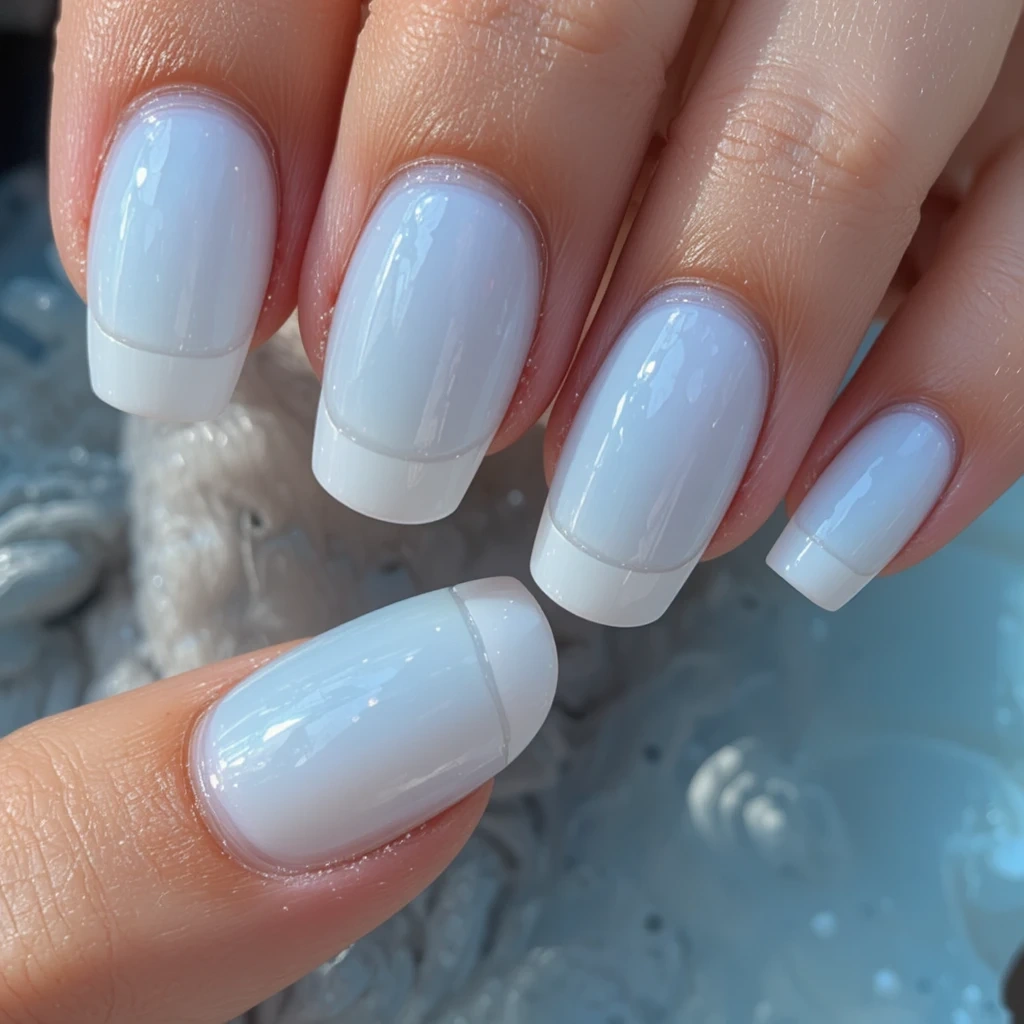
A sheer, opalescent base — almost white but not quite, with a bluish cast depending on the light — topped with a thin, clean white tip drawn in a very slight smile line. The whole nail has a frosted, barely-there quality, like sea glass held up to sunlight. It reads fresh and expensive without any individual element being loud. This is the nail for people who get compliments and then can’t explain exactly what’s on their fingers.
- Difficulty: Beginner
- Best Nail Shape: Short coffin, squoval
- Best For: The person who wants a manicure that works equally well at a gallery opening and a Monday meeting
- What Makes It Stand Out: The opalescent base means the tip blends rather than contrasts, giving it a 3D quality that a plain white tip doesn’t have
- Product Spotlight: OPI Nail Lacquer in “Funny Bunny” ($11, Ulta) — a sheer milky pink that applies in one even coat and provides exactly the right level of translucency without streaking. Most sheers either disappear or go patchy; this one sits.
Greige Contour Tip
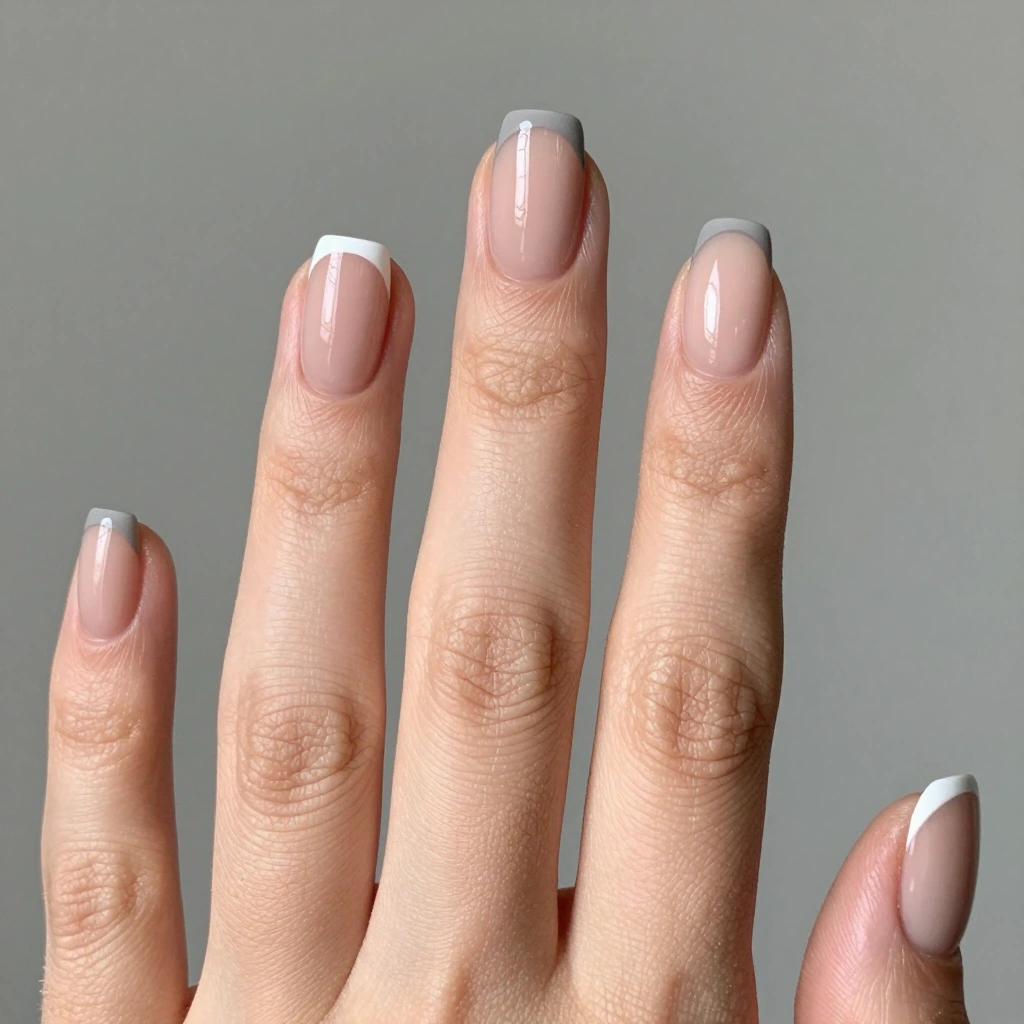
A warm greige — somewhere between taupe and beige with a hint of grey — over a nude base in almost the same family. The tip is just slightly darker than the base, making the line subtle but present. On short nails, this creates the illusion of extra length through tone-on-tone contrast rather than sharp white. It’s understated in a way that takes a second to register. The kind of nail that photographs neutrally but looks intentional in person.
- Difficulty: Beginner
- Best Nail Shape: Short coffin, square
- Best For: Minimalists who find classic white french tips too stark
- What Makes It Stand Out: The low contrast reads as a single color until someone looks closely — it rewards attention rather than demanding it
- Product Spotlight: essie in “Topless & Barefoot” ($10, Target) — a true warm nude that sits in the exact middle of the greige spectrum and layers cleanly over itself for the tip without muddying.
Barely Blush
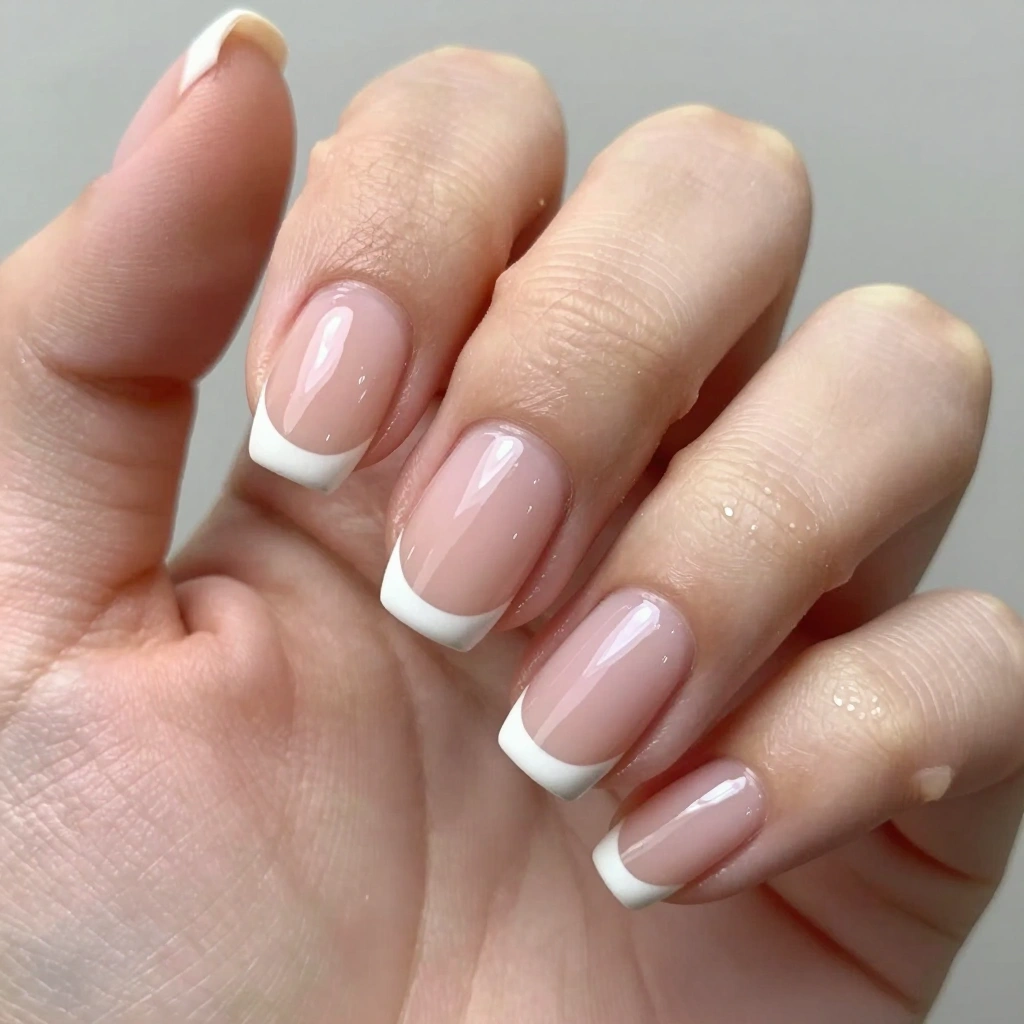
A nude-pink base, close to the natural nail, with a very thin, fine-point white tip — drawn with almost no width, just enough to define the edge. The smile line is kept low and flat rather than curved, which suits the coffin shape. In natural light, it looks like an enhanced natural nail. Under yellow indoor lighting, it disappears almost completely. This is the nail you wear when you don’t want to think about your nails but still want them done.
- Difficulty: Beginner
- Best Nail Shape: Short coffin
- Best For: Low-maintenance people who want a polished look that requires no maintenance decisions
- What Makes It Stand Out: The flat smile line instead of arched makes it feel modern rather than traditionally french
- Product Spotlight: Zoya Naked Manicure in “Petal” ($10, Zoya.com) — it has a soft pink pigment with a faint warmth that matches most skin tones without looking like a band-aid.
Color-Tipped and Confident
These are the designs for when you want people to notice. Still structured, still french-tip-adjacent, but with a color decision that makes a point.
Black Lacquer Line
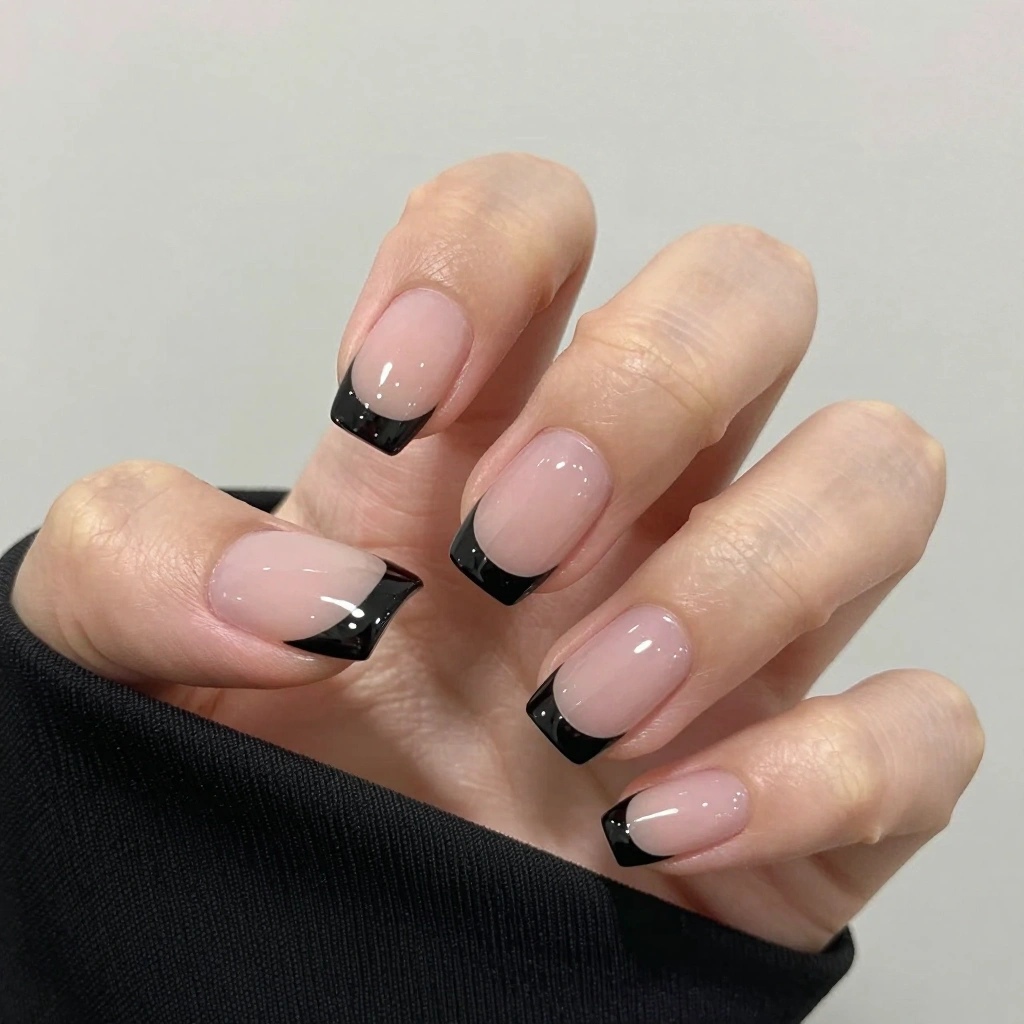
A crisp, opaque black tip over a nude or clear base. No gradient, no shimmer — just a very clean, very sharp line at the edge of the nail. On short coffin nails, the black tip reads graphic and architectural rather than gothic. The contrast is high but the palette is small, which keeps it sophisticated. It’s the nail equivalent of wearing a white shirt with black trousers: simple, but committed.
- Difficulty: Intermediate (the line needs to be very clean)
- Best Nail Shape: Short coffin, stiletto
- Best For: People who dress monochromatically or want a nail that reads as intentionally bold
- What Makes It Stand Out: The sharp geometric quality of the coffin edge makes the black tip look designed rather than edgy
- Product Spotlight: Sally Hansen Insta-Dri in “Black to Black” ($5, CVS) — the quick-dry formula allows for precise clean-up within the first 60 seconds, which is the window you need to get the line sharp on short nails.
Cherry Stem Red
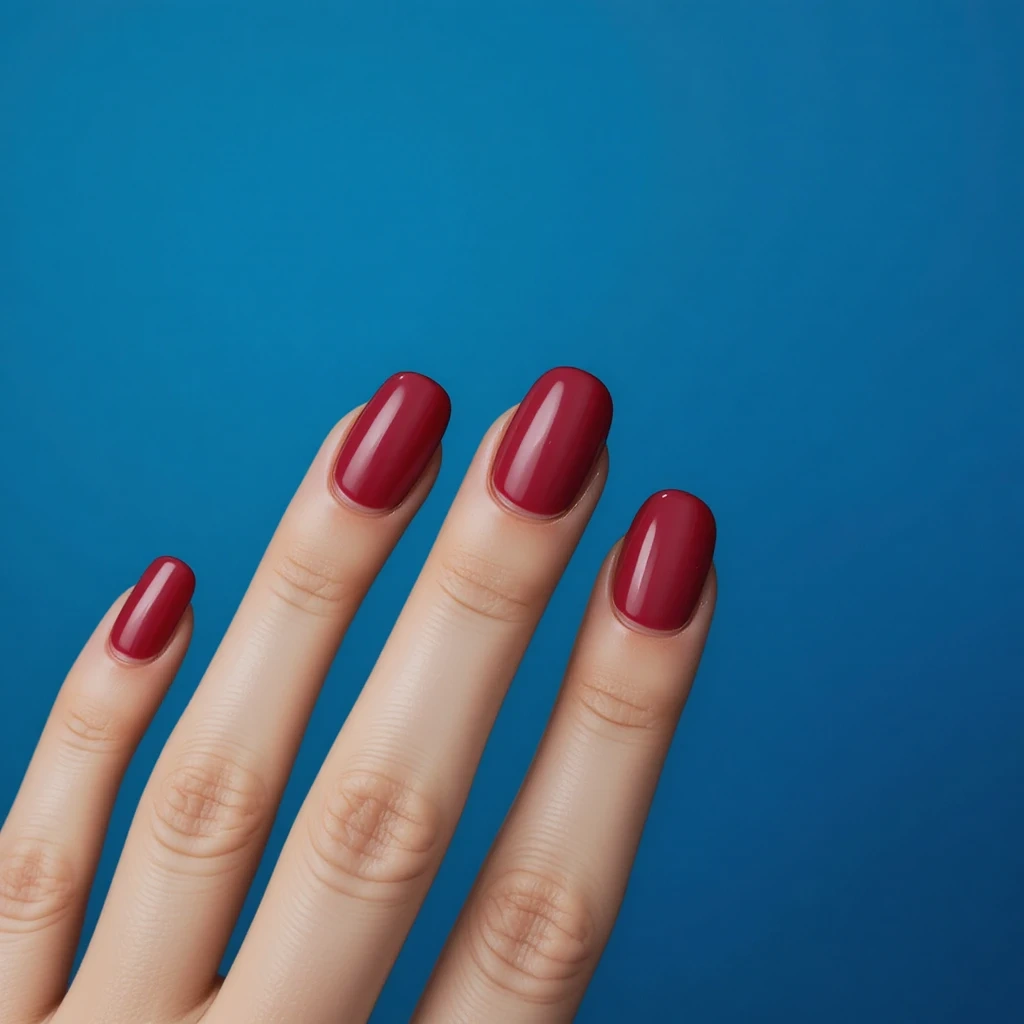
A deep, blue-toned red — not orange-red, not brick, specifically the shade of a ripe cherry — painted as the tip over a sheer base or bare nail. The color has the saturation of a classic red nail but the format keeps it modern. On short coffin nails, the color concentrates at the tip and reads almost like a seal wax stamp. It’s warm but precise.
- Difficulty: Beginner to Intermediate
- Best Nail Shape: Short coffin, oval
- Best For: Going out, evenings, anything that calls for a classic red without the old-fashioned connotation
- What Makes It Stand Out: The blue undertone reads more sophisticated than a warm red at this scale — it doesn’t look like a Christmas nail
- Product Spotlight: Chanel Le Vernis in “Pirate” ($32, Chanel.com or Nordstrom) — yes, the price is real, and the depth of this specific red at this specific blue-toned pitch is genuinely difficult to find cheaper. If that’s not happening, Essie’s “Really Red” ($10, drugstore) is the closest affordable dupe.
Smoke and Gold
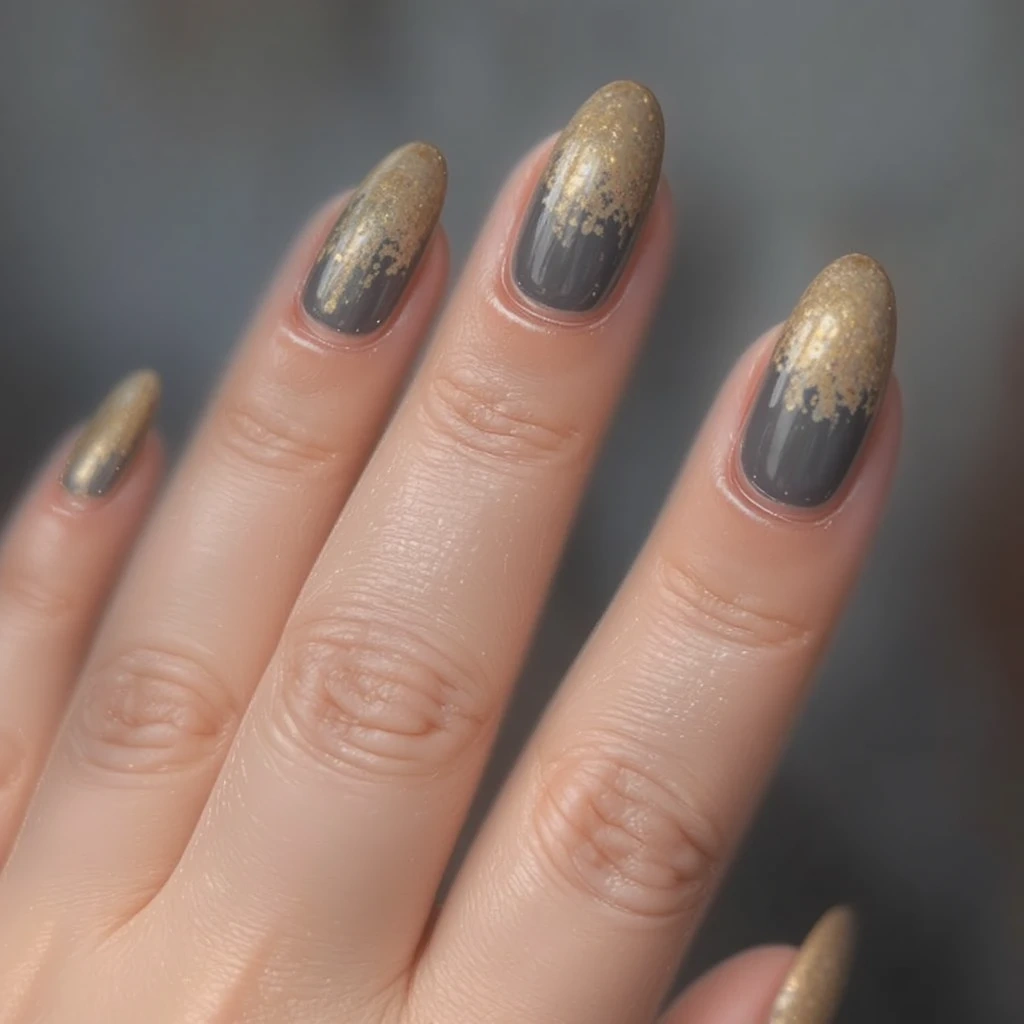
A charcoal or near-black grey base with a thin, metallic gold tip. The tip is drawn fine — 1 to 2mm wide — and the gold has a warm, burnished quality rather than a bright foil finish. Together, the combination reads like evening wear for your hands. It’s glamorous without being maximalist. On short nails, the restraint of the tip width is what keeps it from tipping into costume territory.
- Difficulty: Intermediate
- Best Nail Shape: Short coffin
- Best For: Events, autumn and winter evenings, anyone who wears a lot of black and gold
- What Makes It Stand Out: The fine tip width means the gold acts as an outline rather than a color block, which is more refined than a typical gold french tip
- Product Spotlight: Deborah Lippmann “All That Jazz” ($22, Nordstrom) — a fine metallic gold in a slightly antique finish that doesn’t have the plasticky quality of most gold polishes.
Dusty Cobalt Edge
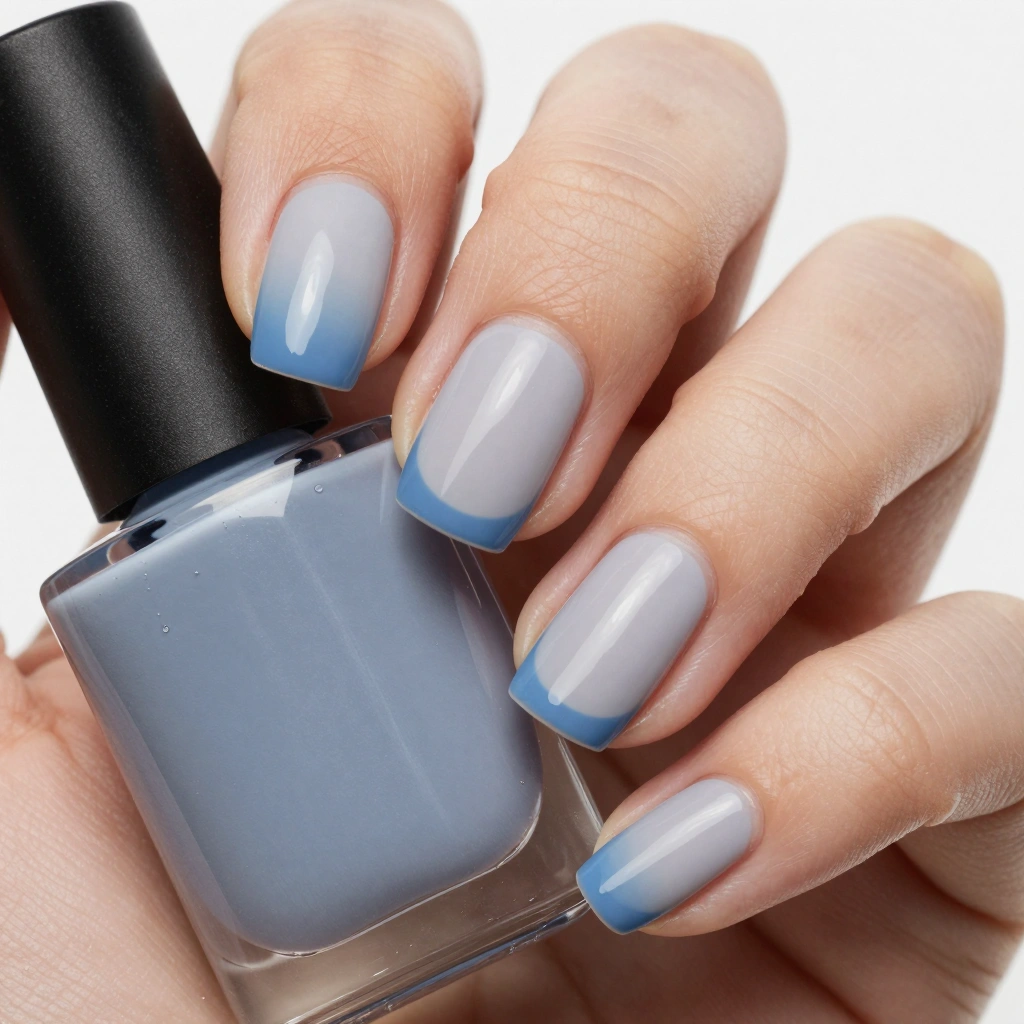
A muted, slightly chalky cobalt blue tip over a white or pale grey base. The cobalt isn’t bright — it’s been pulled toward grey slightly, which takes off the primary-color sharpness and replaces it with something more fashion-forward. On short coffin nails, this color reads as deliberate and interesting without being loud. It works better in person than in photos, which is part of its appeal.
- Difficulty: Beginner
- Best Nail Shape: Short coffin, square
- Best For: People who want to wear color but find saturated brights overwhelming
- What Makes It Stand Out: The grey undertone in the cobalt prevents it from reading as either preppy or trendy — it sits in its own visual category
- Product Spotlight: OPI in “Yoga-ta Get This Blue!” ($12, Ulta) — a dusty mid-blue that applies in two coats without streaking and has enough of a matte quality to feel intentional rather than glossy.
Texture and Dimension
These designs add a material quality beyond flat color — something that catches the light differently, or adds a layer of visual interest that makes the nail feel curated.
Foil Flash Tip
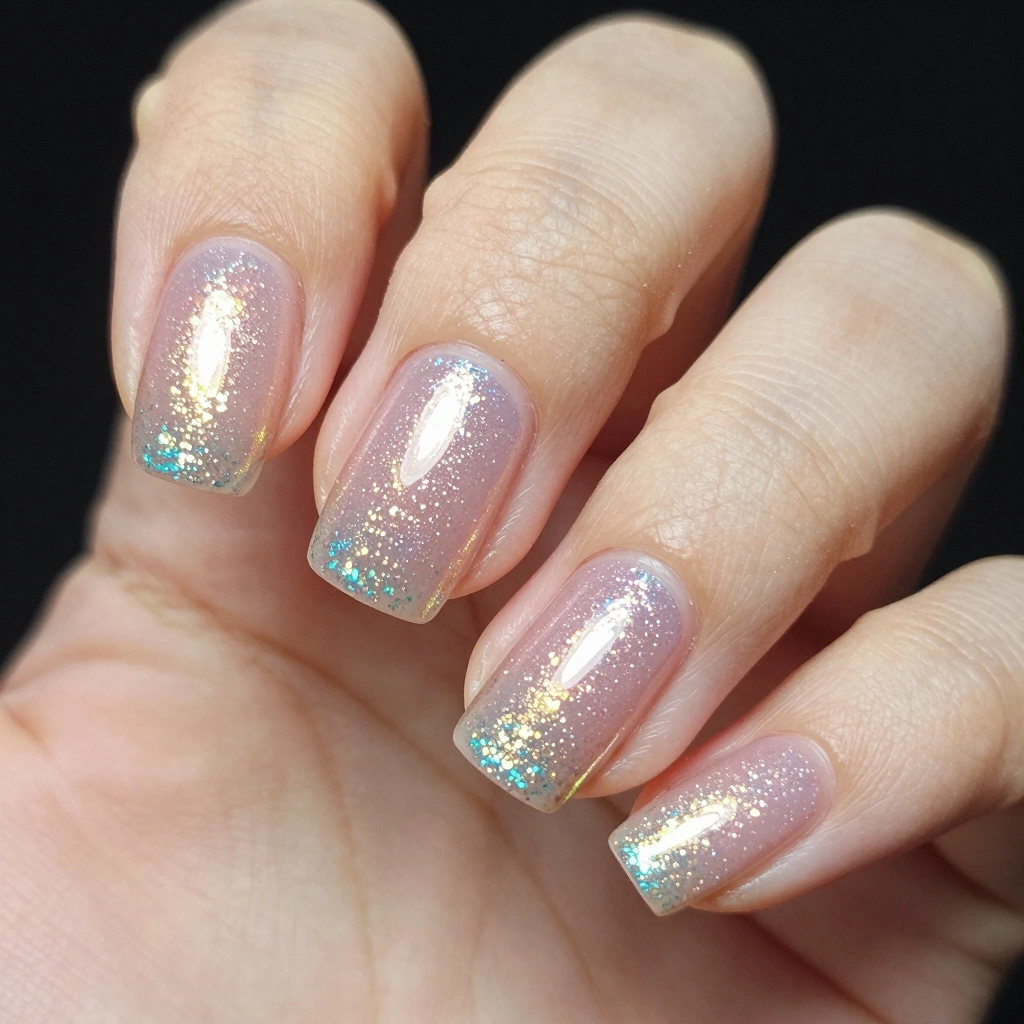
A chrome or holographic foil applied only to the tip of the nail, over a nude or milky base. The foil catches light and fragments it, creating a small but intense visual at the very edge of the nail. On short coffin nails, the foil tip reads almost like a piece of jewelry — concentrated, deliberate, and quietly spectacular. In certain lighting, it’s barely visible; in others, it’s all you see.
- Difficulty: Intermediate (foil application requires a gel base or transfer gel)
- Best Nail Shape: Short coffin, stiletto
- Best For: Special occasions, editorial looks, anyone who wants a high-impact nail that isn’t a full color statement
- What Makes It Stand Out: Foil on just the tip means the reflective quality is edited rather than overwhelming — you get drama without chaos
- Product Spotlight: Beetles Gel Polish Nail Foil Transfer Kit ($8, Amazon) — the transfer gel included makes foil application clean even on short nails where over-application is harder to hide.
Glazed Linen Tip
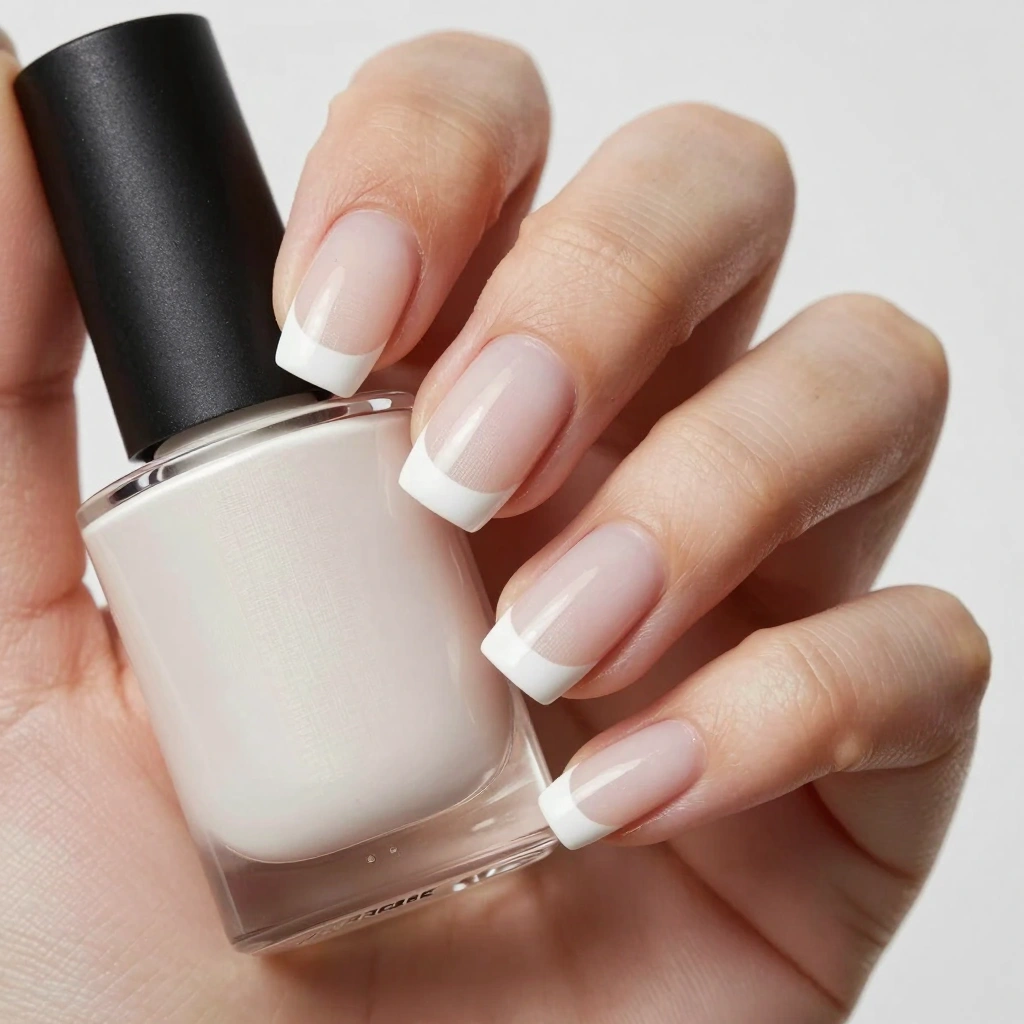
A soft, warm white tip — not bright white, more the color of unbleached linen — over a sheer beige base with a slightly satin finish. The combination reads warm and organic rather than clinical. The satin topcoat takes the edge off the color, preventing the stark contrast of a traditional bright french. This is the nail for people who want a french tip but find classic white too sharp against their skin tone.
- Difficulty: Beginner
- Best Nail Shape: Short coffin, squoval
- Best For: Warm skin tones, spring and summer, people who wear linen and neutral palettes
- What Makes It Stand Out: The satin finish unifies the base and tip into one tonal story rather than two separate elements
- Product Spotlight: Orly “Dreamweaver” ($10, orlybeauty.com) — a warm white with a slight creaminess that sits between off-white and ivory and has just enough translucency to soften at the edges.
Cracked Marble Tip
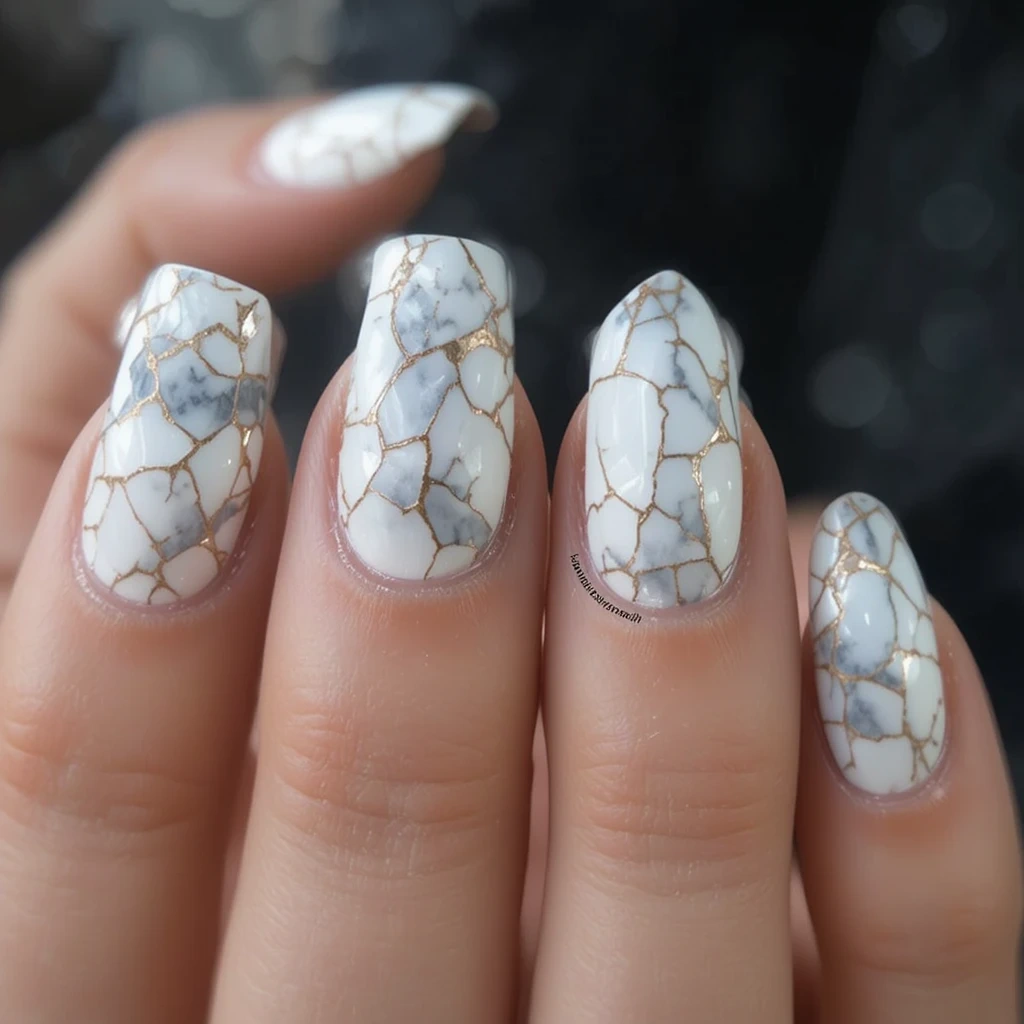
A white tip with thin, hand-drawn grey veins — very fine, very sparse, done with a thin nail art brush or a broken-off bobby pin. The veining stays only within the tip area; the base stays clean. The result reads like a marble inlay at the edge of the nail rather than a full marble nail, which is much more wearable. This works especially well on short coffin nails because the contained tip area gives the veining a frame.
- Difficulty: Intermediate to Advanced (the brush control required is real)
- Best Nail Shape: Short coffin
- Best For: People who want nail art but want it to read as sophisticated rather than playful
- What Makes It Stand Out: Limiting the marble detail to the tip means you get the editorial quality of marble nails without the busyness of covering the whole nail
- Product Spotlight: Born Pretty Nail Art Liner in “Grey” ($4, bornprettystore.com) — the thin brush in this liner is small enough to create veins that actually look like marble rather than grey scribbles.
Sand Dollar Chrome
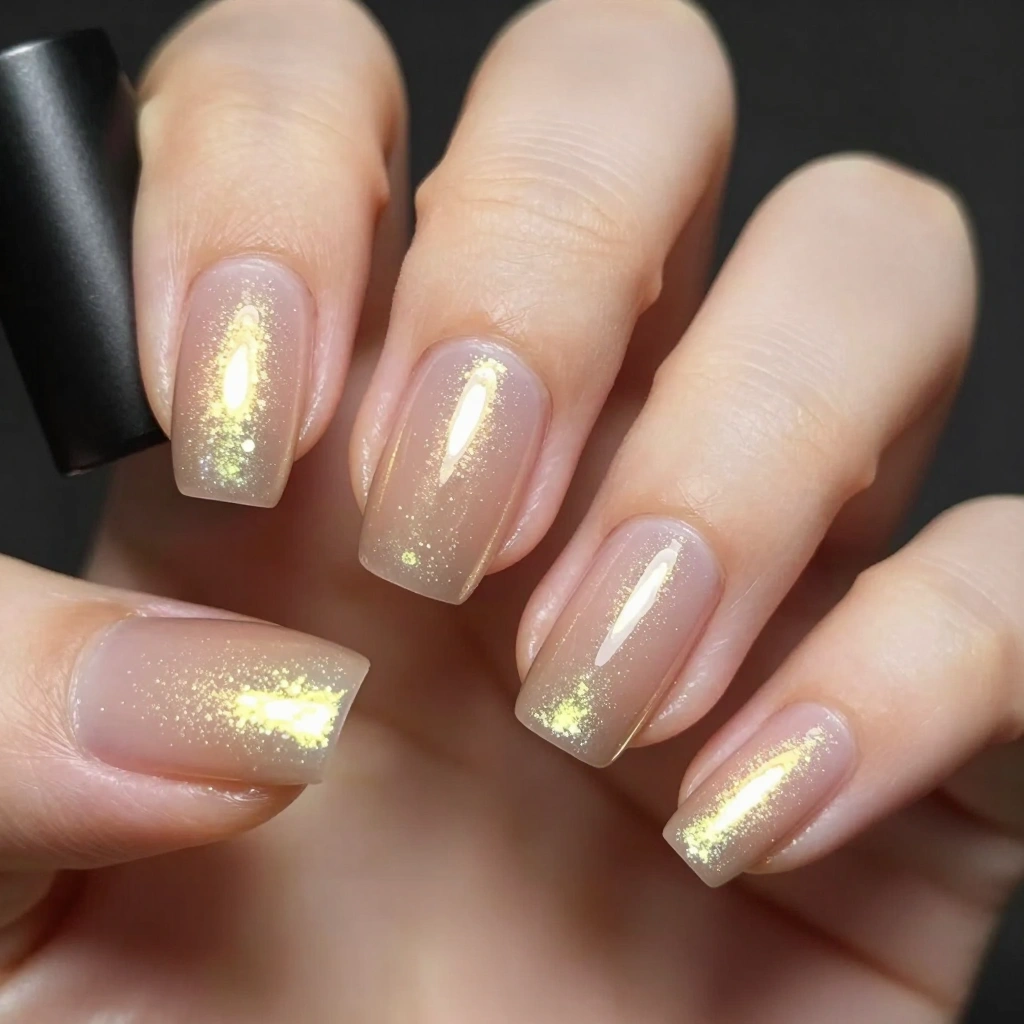
A champagne or pale gold chrome powder buffed onto a nude base, with the concentration of shimmer gradually intensifying toward the tip rather than a hard line. The effect is a gentle gradient of warmth — more subtle than a traditional ombre but more dimensional than a flat chrome. On short coffin nails, the shimmer reads as a glow rather than a metallic coating. It photographs warmly and reads expensive in person.
- Difficulty: Intermediate (requires gel base for chrome powder adhesion)
- Best Nail Shape: Short coffin, oval
- Best For: Autumn and winter, holiday occasions, warm skin tones
- What Makes It Stand Out: The gradient quality prevents the hard tip line of a traditional french, making it feel more organic and less graphic
- Product Spotlight: Morovan Chrome Nail Powder in “Champagne Gold” ($7, Amazon) — the particle size is fine enough to achieve a soft blur at the gradient edge rather than a glitter-like speckle.
Frosted Sage
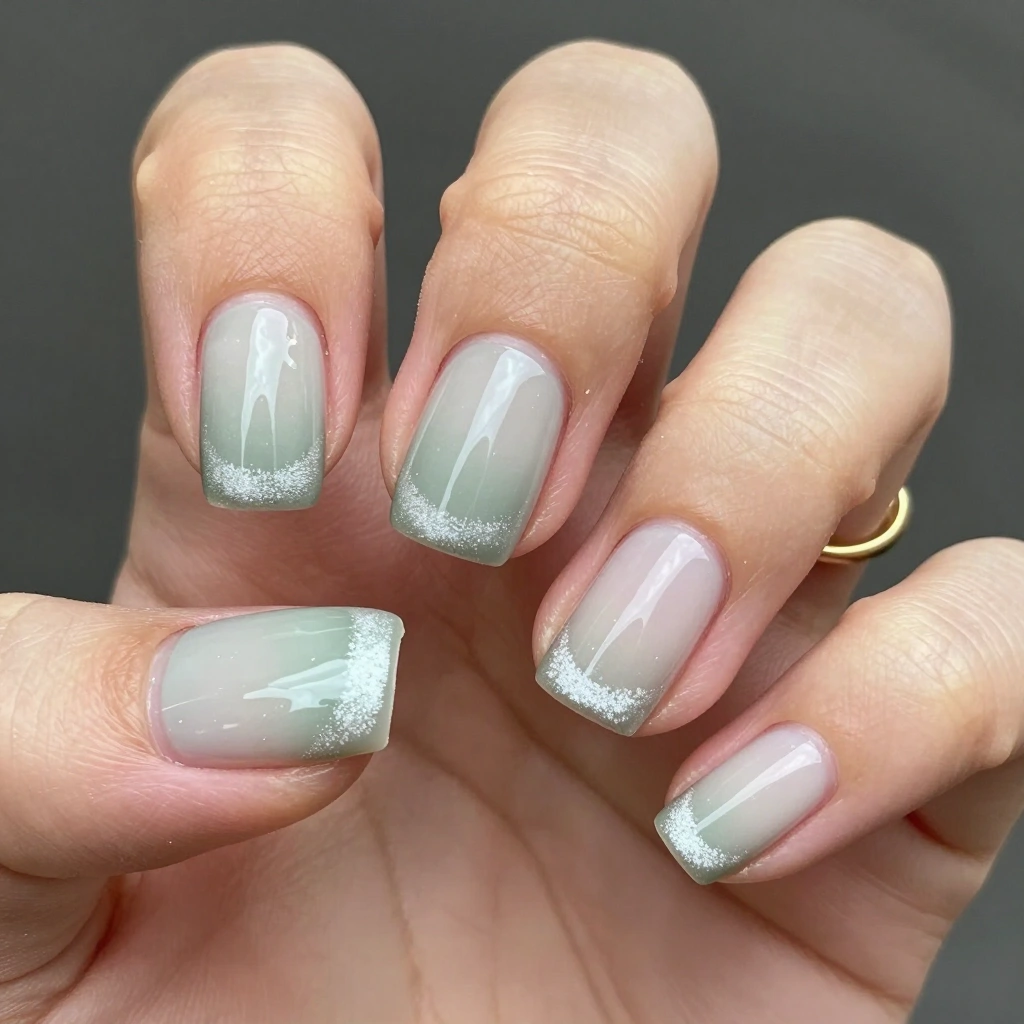
A muted, desaturated sage green tip — more grey than green, with a slight silvery frost — over a clean, pale base. The colour sits in that hard-to-place territory between grey-green and eucalyptus. On short coffin nails, this tip reads botanical and tactile. It pairs naturally with gold jewelry and leans into the nature-influenced minimalism that’s been dominant in fashion for the last few years.
- Difficulty: Beginner
- Best Nail Shape: Short coffin, square
- Best For: People who gravitate toward earth and plant tones, transitional seasons
- What Makes It Stand Out: The frost finish dulls the green enough that it reads as a sophisticated neutral rather than a statement color
- Product Spotlight: Zoya “Cala” ($10, Zoya.com) — a dusty, slightly chalky sage that applies evenly and has a naturally muted quality that doesn’t need an additional matte topcoat to achieve the frost effect.
Salon Chair or DIY?
Here’s where I’ll be honest: most of these designs are easier than they look, with a couple of notable exceptions.
The clean line designs — Black Lacquer, Cherry Stem, Barely Blush — are the ones most people assume require a professional. They don’t, necessarily, but they do require patience and a cleanup brush. The biggest mistake people make at home is trying to freehand a precise tip line with the nail polish brush. A striping brush, a guide strip of tape, or a nail tip sticker used as a temporary guide all produce cleaner results than freehand, and they’re available at any beauty supply store for a few dollars.
The designs that genuinely belong in a salon chair are the ones involving gel, chrome powder, or foil transfer. The Foil Flash Tip and Sand Dollar Chrome both require a gel base to adhere properly — chrome powder brushed over regular nail polish doesn’t stick the same way, and the effect deteriorates within hours. If you’re doing these at home with a gel lamp and proper gel products, go ahead. If you’re working with regular polish, skip these two or adjust expectations significantly.
The Cracked Marble Tip is the one I’d say has the steepest home learning curve. The brush control required to draw convincing veining is a skill, and most first attempts look like grey scratches rather than marble. If you want this look for an occasion rather than practice, book a nail tech. When you ask for it, say “editorial marble french tip, just the white tip area, sparse veining, short coffin shape” — that’s specific enough that any competent nail tech will understand immediately.
For everything else: the Milky Glass, Greige Contour, Glazed Linen, Frosted Sage, and Dusty Cobalt are all within reach at home with steady hands, good lighting, and the willingness to do two or three practice runs before the real thing.
What’s Trending vs. What’s Timeless
Right now
The version of french tips that’s everywhere at the moment is deliberately imprecise. Thick, slightly uneven tip lines. Tips that aren’t white but are an unexpected color — sage, cobalt, mocha brown, even black. The “messy french” has been building since around 2023 and shows no signs of stopping. On short coffin nails specifically, the current iteration tends to favor a thin tip with a tonal or unexpected color over a traditional white arc, and often pairs with a slightly sheer or milky base rather than a full opaque one.
Chrome finishes on the tip specifically — rather than full-nail chrome — are also genuinely current. It reads as an elevated evolution of the foil tip trend and suits short nails because the effect is contained rather than overwhelming.
Always works
The classic white smile line over a sheer nude has never gone out of style and won’t. It’s been on the hands of every cultural reference point from 1990s supermodels to contemporary minimalists. The reason it persists is that it solves a real aesthetic problem — it makes nails look healthy, clean, and finished without adding colour that requires coordination with an outfit. The tone-on-tone greige version (slightly darker tip over a nude base) is the contemporary update to the classic that’s been quietly permanent for the last five years — it’s never going to read as dated because it’s too close to a natural nail to belong to a specific moment.
Honest Pros & Cons
✅ Short coffin is one of the few shapes that genuinely flatters a wide range of nail bed widths — the slight taper is universally softening
✅ French tips on short nails break less than longer styles because there’s less nail to catch or bend
✅ The format works across formalities — the same shape moves from office to evening with only a colour change
✅ Colour-tipped versions let you wear statement colour without the full commitment of a saturated all-over nail
✅ The contained tip area makes nail art less risky — a mistake on 2mm of nail is easier to fix than a mistake across the whole surface
✅ Short coffin grows out relatively gracefully compared to almond or stiletto shapes — you get an extra week before it looks untidy
❌ The coffin tip requires a specific filing technique to get right — file it wrong and you get a square or an uneven flat edge that ruins the shape
❌ White tips on short nails show chips faster than on longer nails because there’s less visual mass to absorb the damage
❌ The short coffin shape is unforgiving if your nails aren’t all the same length — asymmetry reads more obviously than on rounded shapes
❌ Colour tips in unexpected shades (cobalt, sage, black) require a very clean line or they look unfinished rather than editorial
❌ Chrome and foil options don’t translate to regular polish at home — the effect degrades within a day without a proper gel base
FAQ
Can I do a short coffin shape on my natural nails, or do I need extensions?
Yes, natural nails work well — you need about 3–5mm of free edge past the fingertip to file a coffin shape properly. Any shorter and the flat tip disappears into the finger. If you’re below that, a thin set of tips glued at the edge (not a full extension) adds just enough length to work with.
How do I stop the tip line from looking wobbly at home?
Use a small piece of nail guide tape or a regular scotch tape strip placed just above where you want the line, paint the tip, then remove the tape immediately before the polish dries. The tape edge gives you a mechanical guide that a freehand brush rarely matches. OPI Nail Art Brushes Striping Brush ($7, Ulta) also helps for touch-ups once the tape is removed.
Do colored french tips work on short nails, or do they just look like a mistake?
They work, but the tip width matters. Keep it thin — 1.5 to 2mm — and the colour reads as intentional. A wide colour block on a short nail reads as an imprecise edge rather than a design. Dusty, muted shades land better than brights because they’re less harsh at close range.
How long does a short coffin french tip last before it needs a fill or redo?
In gel, expect 2.5 to 3 weeks before the grow-out becomes visible at the cuticle. In regular polish, the tip itself starts to show wear at the edge around day 5–7 — a topcoat refresh over the tip (without removing the base) adds another 3–4 days. The coffin shape specifically tends to show tip wear slightly faster than rounded shapes because the flat edge hits surfaces more directly.
Closing
Short coffin french tips are one of the few nail styles where restraint actually creates more impact than going bigger. The length doesn’t need to announce itself; the shape and the tip do the work.
If you’re not sure where to start, the Milky Glass Tip is the most forgiving version — beginner-friendly, universally flattering, and interesting enough that it doesn’t just disappear. Get that one right, and the rest of the list opens up from there.