10 Orange Almond Nails Ideas – Worth Obsessing Over
There’s something about orange nails on an almond shape that feels almost unreasonably right — like the color and the silhouette were made for each other, and everyone else is just catching up.
Orange has had its cultural moment, then another one, then another. But almond nails don’t follow trends so much as make everything look intentional. Together, they’re the combination I keep coming back to no matter the season.
This article covers 10 specific takes on the look — from barely-there peach to full-on lacquered brick — with honest opinions on what works, what’s harder than it looks, and the one product that earns its place in each design.
Who This Look Is For
Almond nails are the shape that photographs well from every angle, and orange is the color that works in almost every lighting condition — which is maybe why this combination shows up everywhere from editorial shoots to farmers markets.
If you’ve got shorter nails, don’t write this off. A shorter almond (sometimes called a soft oval) still holds the shape, and a muted orange — something in the terracotta or peach family — actually reads more polished on a compact nail bed than a bright true-orange would. Longer nails let you get away with more drama: think chrome finishes, ombre, or nail art details that need visual real estate.
On nail shape: The almond specifically softens orange. The pointed oval tip pulls the color upward and makes it feel elongating rather than blocky. It’s why the same shade in a square shape can look costume-y, while on an almond it looks deliberate. Coffin can work, but it tips things into more maximalist territory — fine if that’s where you’re going.
On seasons: People reach for orange most in fall, obviously, but the lighter iterations — peach nudes, sand chromes, diluted terracottas — work year-round without any seasonal clash. I’ve worn a washed-out pumpkin shade in February and had people ask if it was a “spring neutral.”
1. Peach Fog
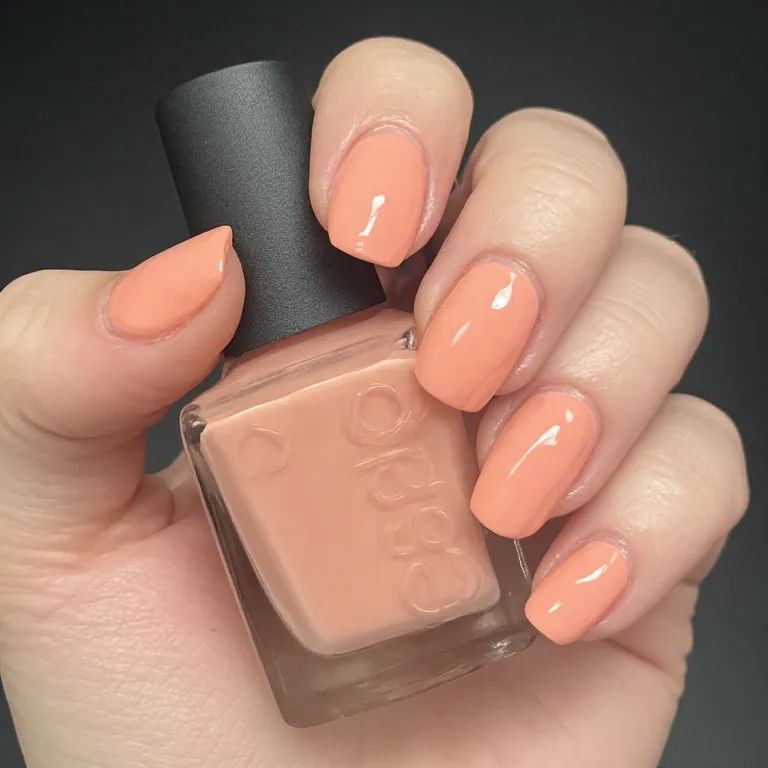
A barely-there peach with a skin-like warmth — closer to your actual skin tone than most nudes, but with just enough pigment to read as a color rather than a base coat. It has that “your nails but better” quality that makes short almond shapes look professionally done, not underdone. This is the one people reach for when they want polish but not nail art, which honestly is most of the time.
- Difficulty: Beginner
- Best Nail Shape: Short almond, soft oval
- Best For: Office environments, neutral-leaning aesthetics, daily wear
- What Makes It Stand Out: It’s warm enough to flatter almost every skin tone without feeling peachy-pink or baby-colored.
- Product Spotlight: OPI Bubble Bath (Soft Shades Collection, ~$11, Ulta) — it has just enough of a peach lean to feel warm rather than clinical, and the formula self-levels beautifully on almond tips where streaking near the curved edge is a real risk.
2. Caramel Nude
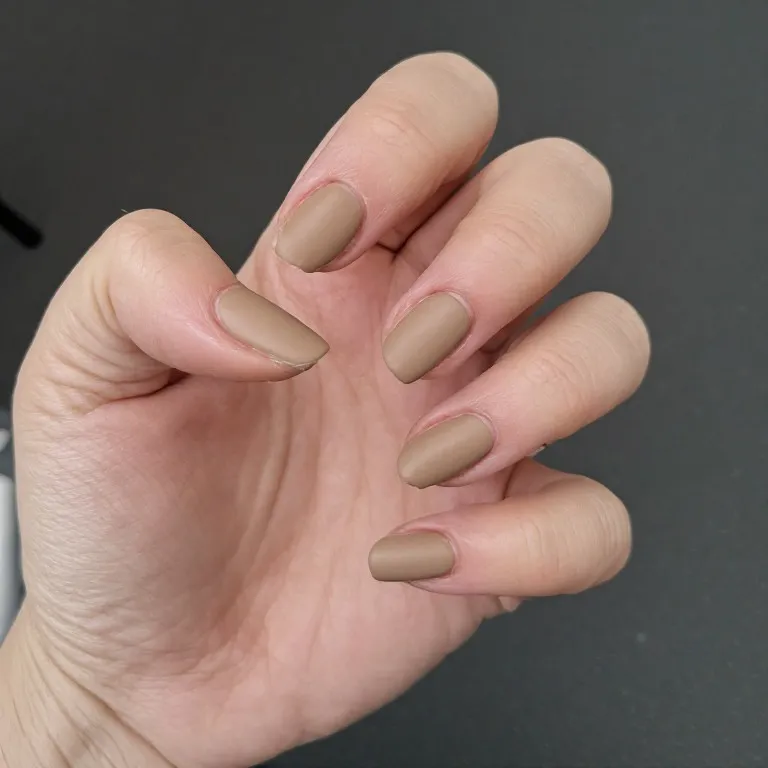
Think a slightly deeper, toasty nude — the color of a latte left to cool for ten minutes, with a semi-matte finish that doesn’t look flat. It sits in the interesting space between nude and brown, which means it reads differently depending on skin tone in the best possible way: on deeper skin it glows, on lighter skin it looks deliberately editorial. The person who reaches for this is usually someone who considers nail color part of a full-look calculation, not an afterthought.
- Difficulty: Beginner
- Best Nail Shape: Medium to long almond
- Best For: Minimalists who still want presence, autumn everyday wear
- What Makes It Stand Out: It photographs as a true neutral but reads as a color in person — the best of both worlds.
- Product Spotlight: Essie Topless and Barefoot (~$10, Target) — the formula is slightly thicker than Essie’s usual, which means fewer coats on the curved almond nail bed, and the caramel tone sits warm without pulling pink.
3. Ember Glaze
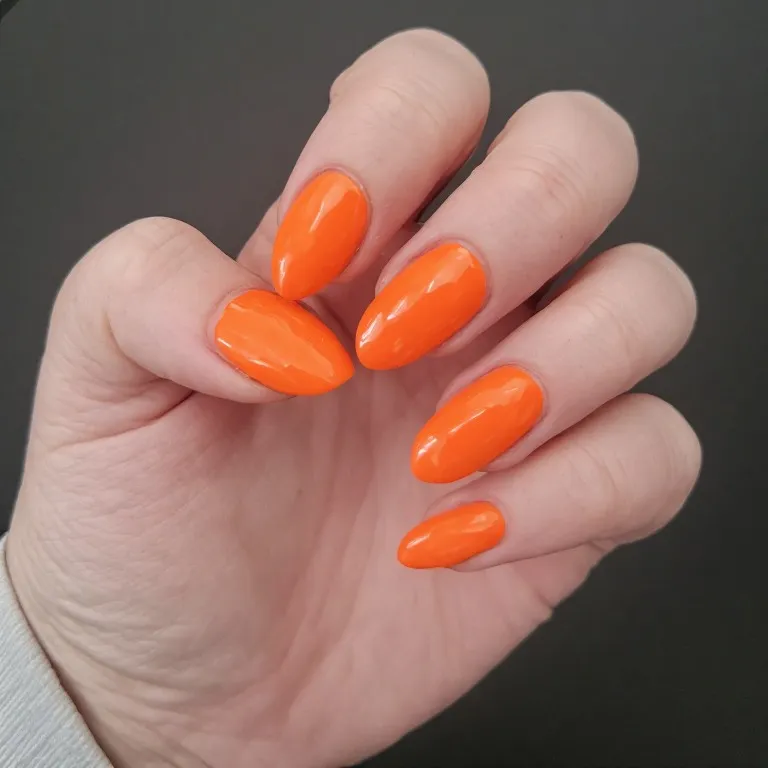
A true, saturated orange with a glossy lacquer finish — the kind of orange that makes your hands look like they belong in a magazine. No shimmer, no metallic, just pure pigment with depth. It’s assertive without being aggressive, and the almond shape keeps it from reading as Halloween costume. People who wear this tend to be decisive about color in general — their wardrobe has a point of view.
- Difficulty: Beginner to Intermediate (color application requires precision at the cuticle)
- Best Nail Shape: Medium to long almond
- Best For: Statement occasions, warm-weather outings, anyone who leans maximalist
- What Makes It Stand Out: The gloss level on a true orange is everything — a dull finish makes it look faded; high-shine makes it look intentional and expensive.
- Product Spotlight: Cirque Colors Inferno (~$14, cirquecolors.com) — this is a 5-free formula with an unusually dense pigment load, which means full opacity in two coats on curved nails where most true oranges need three or four passes.
4. Brick Velvet
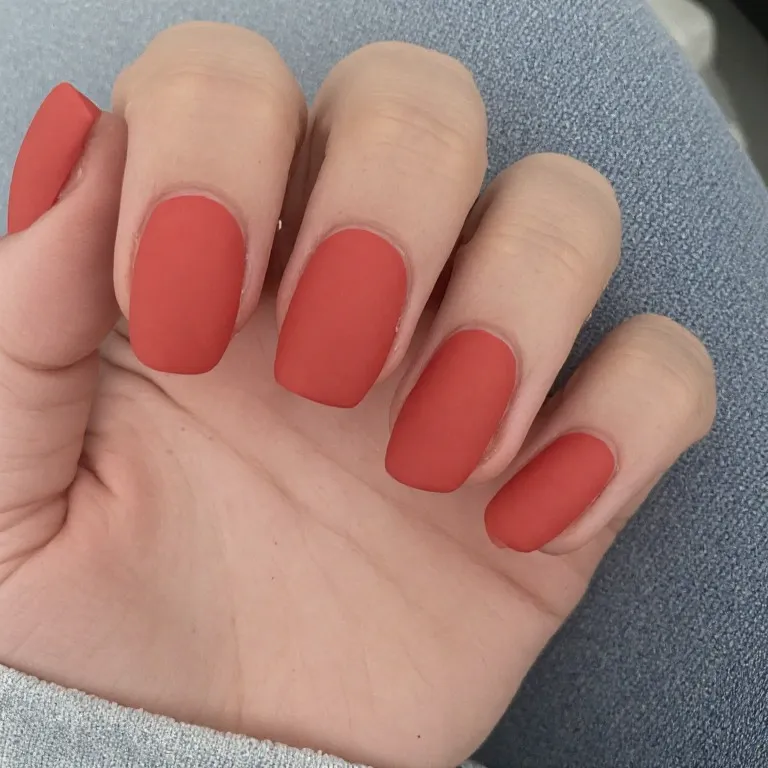
A deep, muted orange-red with a velvety matte finish — closer to the color of sun-dried terracotta than anything you’d call orange at first glance. It’s the most versatile shade in the orange family because it doesn’t read as seasonal; it just reads as rich. Someone wearing this in December doesn’t look like they forgot to change their autumn nails — they look ahead of the next color cycle.
- Difficulty: Intermediate (matte formulas show brush strokes more readily)
- Best Nail Shape: Long almond, medium coffin
- Best For: Cold-weather wear, pairings with camel, chocolate brown, and off-white
- What Makes It Stand Out: The matte finish on a dark orange reads as more sophisticated than glossy would — something about the texture makes the color feel quieter and more intentional.
- Product Spotlight: Zoya Chestnut (~$10, zoya.com) — it’s technically a deep terracotta-brick hybrid, and the formula dries to a semi-matte without a separate topcoat, which matters because adding a matte topcoat over some formulas causes streaking on curved nail shapes.
5. Sand Chrome
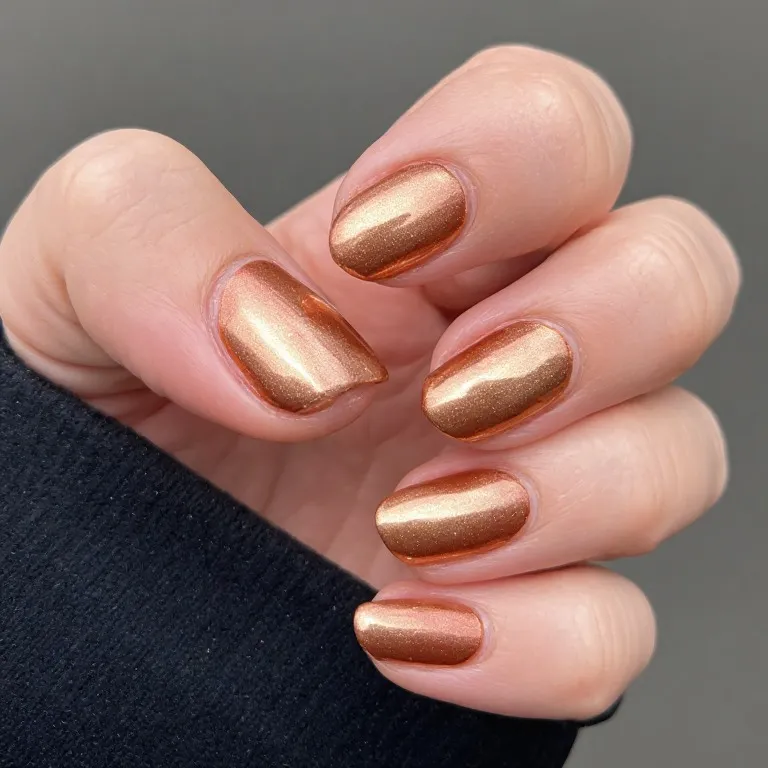
Not your typical chrome — this is a warm, champagne-gold chrome with an orange undertone that makes it read as skin-adjacent rather than metallic. On an almond nail it has a liquid, almost molten quality that catches light without screaming for attention. This is the office-friendly version of wanting to wear something interesting without fielding comments from your manager.
- Difficulty: Intermediate (chrome powders require precise application and a gel base)
- Best Nail Shape: Long almond (the curved tip is where the light reflection looks best)
- Best For: Professional settings with flexible dress codes, events where you want polish without polish-polish
- What Makes It Stand Out: The warm orange undertone keeps it from looking silver or cold — it’s chrome that reads as a nail color, not a special effect.
- Product Spotlight: Kiara Sky Ombre Powder in “Sand Dune” (~$12, kiarasky.com) — this specific powder has a fine particle size that adheres better to curved almond tips than coarser chrome powders, which tend to look patchy at the edges.
6. Washed Pumpkin
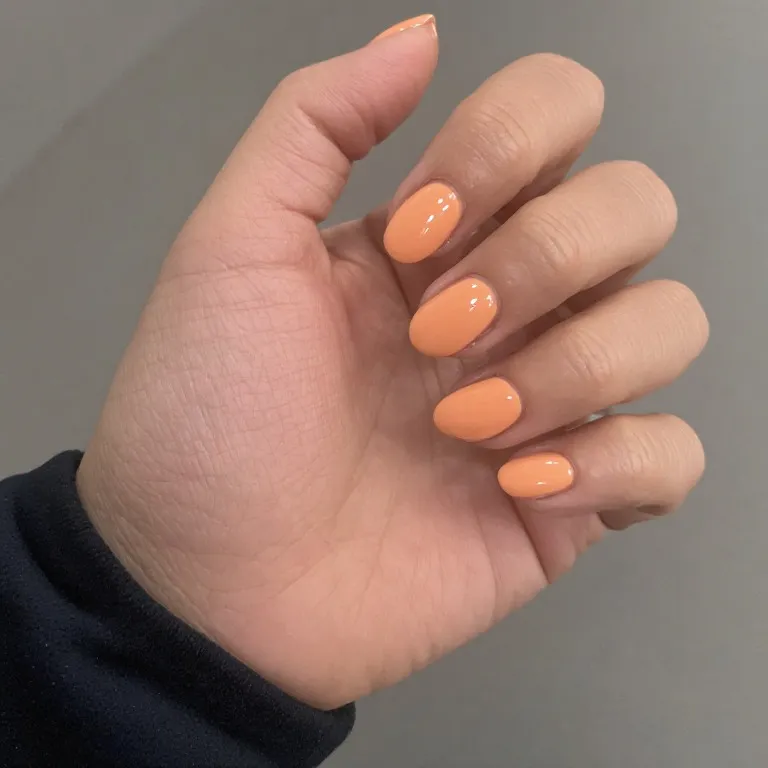
Imagine a true pumpkin orange with about 30% white mixed in — muted, dusty, almost chalky in the best way. The desaturation is what makes it office-appropriate; it takes the heat out of orange and leaves something that reads more like an elevated nude with warmth. In my experience this shade tends to confuse people pleasantly: they can tell it’s a color, they just can’t decide what to call it.
- Difficulty: Beginner
- Best Nail Shape: Short to medium almond
- Best For: Corporate environments, capsule-wardrobe aesthetics, year-round wear
- What Makes It Stand Out: It manages to be visually interesting without being bold — the color equivalent of saying something clever quietly.
- Product Spotlight: Sally Hansen Xtreme Wear in “Peach Daiquiri” (~$4, Walmart) — the formula is thinner than premium brands but the tone is exactly right: dusty, warm, and three-dimensional in a way that more expensive dupes don’t quite nail.
7. Foiled Tangerine
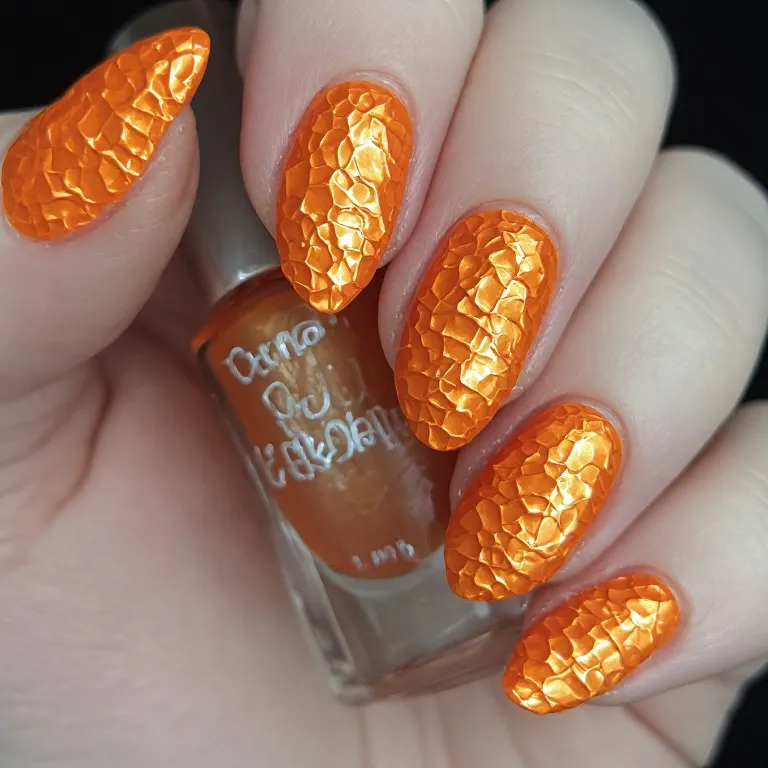
A vivid tangerine orange under a foil-effect topcoat that gives a crinkled, metallic surface texture — like orange tissue paper, but make it fashion. Up close it reads as textured and detailed; from across a room it just looks like a very interesting orange. The almond shape is genuinely necessary here because the foil effect needs surface area to show its movement.
- Difficulty: Advanced (foil application is fiddly and unforgiving)
- Best Nail Shape: Long almond
- Best For: Events, creative industries, anyone who considers nails an accessory as much as jewelry
- What Makes It Stand Out: The texture makes an otherwise familiar color completely different — most people who see it can’t immediately identify what they’re looking at.
- Product Spotlight: ILNP Ultrafoil in “Clementine” (~$13, ilnp.com) — ILNP’s ultrafoil formula is thicker than their regular polishes and deposits foil pigment in one coat, which matters because layering foil polishes breaks down the foil structure and you lose the texture effect entirely.
8. Tortoiseshell Amber
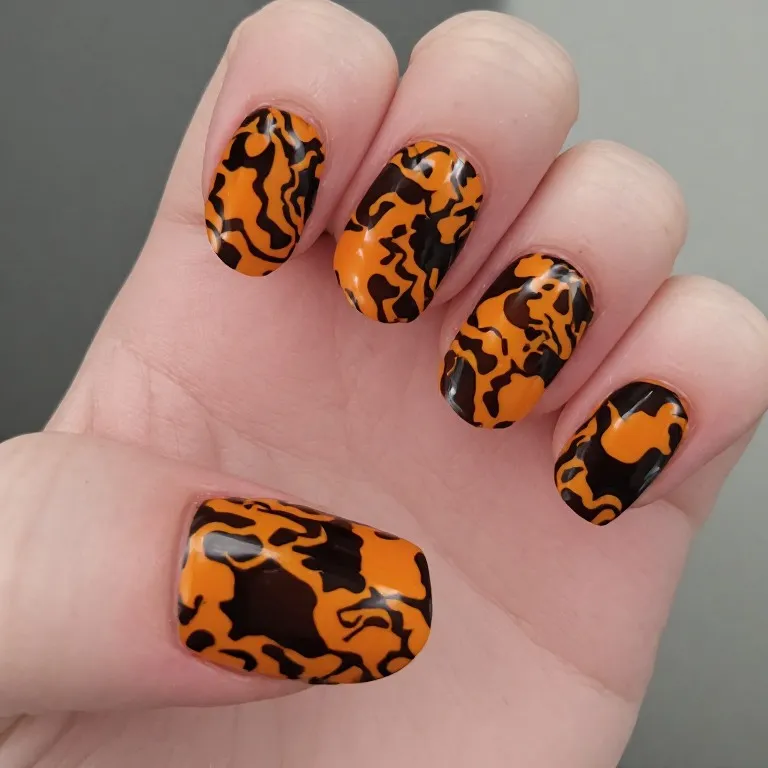
A deep amber-orange base with irregular brown and dark honey swirls layered over it — the tortoiseshell effect done on nails. It’s maximalist but also classic in the way actual tortoiseshell accessories have always been; it references something timeless even while looking like nail art. The person wearing this tends to own a lot of interesting vintage jewelry and has an opinion about coffee.
- Difficulty: Advanced (swirl work requires a thin nail art brush and a steady hand)
- Best Nail Shape: Medium to long almond
- Best For: People who want nail art that references something, not just decorates
- What Makes It Stand Out: Unlike most nail art, tortoiseshell looks better slightly imperfect — the organic variation is part of the aesthetic, not a mistake.
- Product Spotlight: Cirque Colors Lacquer in “Teak” (~$14, cirquecolors.com) for the brown swirl layer — the formula is thin enough for fine-line work without splitting or beading, which is the main failure point when doing swirl details over a wet base.
9. Citrus French
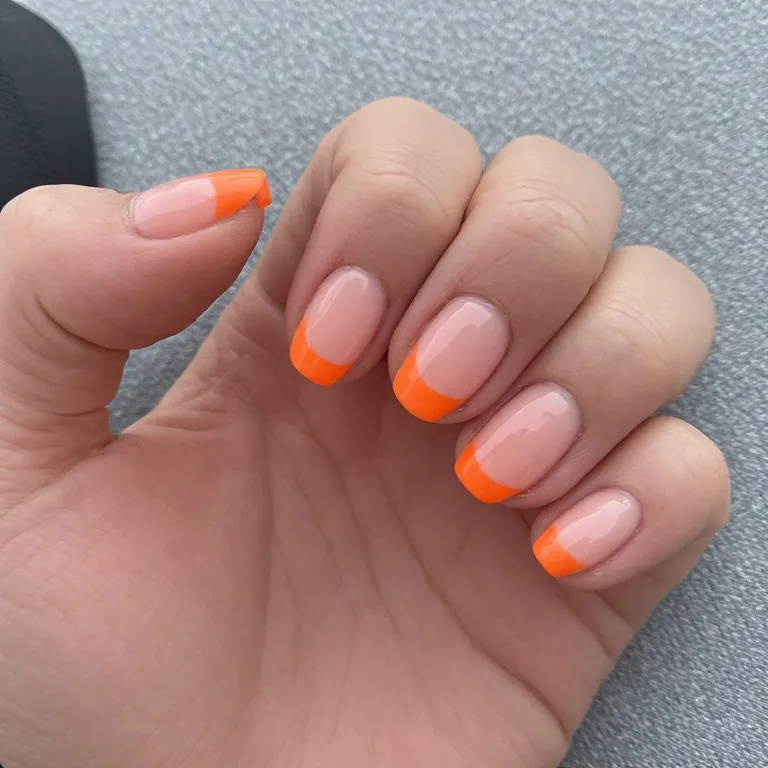
The French manicure re-done with an orange tip on a sheer peach base — not a white tip anywhere in sight. The tip shade ranges from a bright tangerine to a more muted burnt orange depending on how much drama you want, but the structure is the same: clean curved tip line, translucent base. It manages to feel fresh without feeling like it’s trying too hard, which is harder to pull off than it sounds.
- Difficulty: Intermediate (the curved smile line on an almond is harder than on a square or oval)
- Best Nail Shape: Medium to long almond (the almond tip makes the curved French line feel natural)
- Best For: People who love a French but find white tips boring, transitional seasons
- What Makes It Stand Out: The orange tip reads as playful and seasonal while the French structure keeps the whole look clean and composed.
- Product Spotlight: Olive & June French Manicure Pen in “Tangerine” (~$9, Target) — this pen gives precise tip application without the free-hand stress of a brush, and the shade is exactly the right orange: warm enough to be interesting, saturated enough to show on shorter nails.
10. Fire Ombre
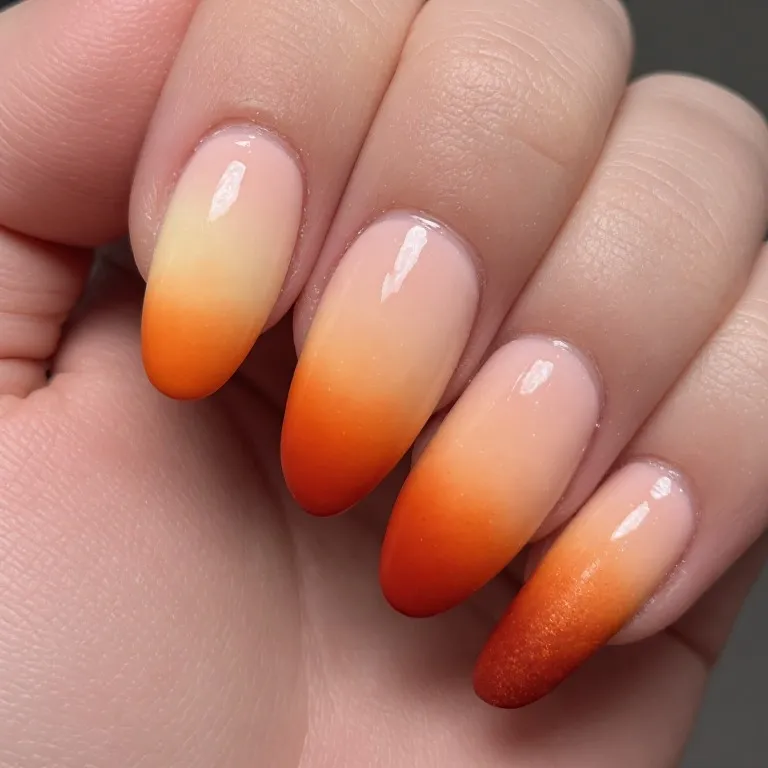
A gradient that runs from a pale peach or cream at the cuticle through orange in the middle and into a deep burnt sienna or brick at the tip — the full warm fire spectrum on one nail. It sounds like a lot, but on an almond shape the gradient has a natural home to land: the tip fade feels purposeful rather than random. From a distance it just looks like an interesting orange. Up close it’s its own sunset.
- Difficulty: Advanced (sponge gradients on curved nails require clean edges and patience)
- Best Nail Shape: Long almond
- Best For: Those who want impact without nail art, anyone who loves the ombre family of looks
- What Makes It Stand Out: The three-color transition makes this look more expensive and complex than a single chrome or solid — but the execution is still achievable at home with the right sponge.
- Product Spotlight: Modelones Gel Polish Kit in the “Autumn Sunset” set (~$18, Amazon) — the three shades in this set are specifically calibrated to blend into each other on the first pass, which makes the sponge transition less muddy than mixing random shades from your collection.
Honest Pros & Cons
Pros
✅ The almond shape makes orange look considered rather than impulsive — the same shade on a square tip reads completely differently.
✅ Orange is one of the most flattering colors across a wide range of skin tones, especially the warmer, muted versions; it tends to warm up the hand rather than wash it out.
✅ There’s a version of this look for every occasion — from a barely-there peach nude at a corporate job interview to a foiled tangerine at a concert.
✅ Orange holds up well in photos and video calls in a way that cooler tones sometimes don’t — it reads as intentional and visible without being distracting.
✅ The sheer volume of orange nail polish options at every price point means you don’t have to spend $15+ to find a formula that works.
✅ The almond shape is relatively low-maintenance between fills compared to coffin or stiletto — the rounded tip is less prone to catching and snapping.
Cons
❌ True orange stains. If you’re using regular polish, skipping a base coat means your natural nail turns yellowish after two weeks and takes a while to clear. This is particularly annoying if you ever want to wear a nude or sheer shade afterward.
❌ Bright orange is unforgiving on nail regrowth. A week of growth on a saturated orange almond nail is obvious in a way that the same growth on a nude or dark shade isn’t — the gap at the cuticle shows up clearly.
❌ Almond nails at a meaningful length require either strong natural nails or extensions. If your natural nails are thin or brittle, the shape doesn’t stay true for long — they break at the narrowest point near the tip.
❌ Matte orange finishes chip differently than gloss: instead of a clean edge chip, you get a scuffed-looking patch that’s harder to do a quick fix on without redoing the whole nail.
❌ Orange can pull very warm or very neon depending on your skin’s undertone, and not every formula photographs the same way it looks in the bottle. What looks like a wearable terracotta in the store can look like a traffic cone under flash.
FAQs
Can I wear orange almond nails to a formal event? Yes, but shade choice matters. A deep brick-orange or a warm sand chrome reads as formal; a bright tangerine does not. Stick to muted, deeper, or metallic interpretations of orange if the occasion has a dress code, and the almond shape will keep the look polished enough for almost any setting.
How long do almond nails typically last before they need a fill? Gel or acrylic almond sets usually need a fill at the 2–3 week mark, depending on your natural nail growth rate. Regular polish on natural almond nails, realistically, looks its best for about 5–7 days before tip wear starts showing at the edges — which matters more on orange than on lighter shades.
What’s the difference between orange and coral nail polish, since they look similar in the bottle? Coral pulls pink; orange doesn’t. Under natural light the distinction is usually clear, but in-store lighting often makes coral look more orange than it is. The test: hold the bottle next to your skin — if it looks like it’s fighting your undertone rather than blending with it, it’s probably pulling in a direction you don’t want.
Does orange nail polish work on very short nails? The lighter, more muted versions do — Peach Fog and Washed Pumpkin especially. Bright saturated orange on a very short nail bed can feel visually heavy or unbalanced. The almond shape helps even on shorter nails because the tapered tip adds the illusion of length.
Is there an orange that works for both warm and cool skin undertones? Terracotta-adjacent oranges — the ones with a slightly brown or earthy base — tend to work across undertones better than pure bright orange. Brick Velvet and Caramel Nude from this list both have enough complexity in their base to avoid pulling too warm or too cool. Washed Pumpkin is also unusually adaptable because the desaturation neutralizes a lot of the temperature clash.
Closing
If there’s one thing I’d want you to take away, it’s that orange nails don’t require a personality shift or a bold moment — they just require the right shade. The muted, earthy end of the orange family is as easy to wear as any nude, and the almond shape does half the work of making any color look intentional.
If you’re not sure where to start, begin with Peach Fog or Washed Pumpkin. Neither of them will shock you, and either of them might be the orange that makes you realize you’ve been sleeping on the whole family.