5 Crochet Flower Pot Free Pattern to Brighten Every Corner of Your Home
A crochet flower pot is one of those small handmade touches that instantly makes a room feel warmer. Whether you wrap a plain pot in a soft yarn cover or fill a little pot with flowers that never need watering, this craft turns ordinary shelves, windowsills, and desks into cozy displays.
It is beginner-friendly, quick to finish, and makes a lovely gift for friends and family. In this post you will find five sweet ideas, each with a styling tip and a helpful extra note, plus a link spot so you can follow a real pattern or tutorial for the one you love most.
5 Charming Crochet Flower Pot Ideas to Try
Pink Crochet Flower Pot
Pink is the color of softness, and a pink crochet flower pot brings a gentle, cheerful glow to any space. Picture a rounded pot in a rosy shade with a little scalloped edge at the top and a tiny bloom resting on the front. It feels sweet without being fussy, and it works whether you prefer a pale blush or a deeper rose. This idea stands apart because the color alone does so much of the decorating, leaving the shape clean and simple.
How to Style It Place it on a sunny windowsill or a bedside table where the pink can catch the morning light. It pairs beautifully with white curtains, wooden shelves, and a small stack of books, giving a calm and tidy look.
Good to Know Pink pots are a popular choice for gifts such as birthdays, Mother’s Day, and baby showers, because the color feels warm and welcoming. If you are making one for a child’s room, a pink pot with a small faux flower is a charming and safe decorative piece.
Pink Light Crochet Flower Pot
A light crochet flower pot leans into airy, pastel shades such as pale sky blue, soft mint, or butter yellow. The mood here is fresh and breezy, like the first warm morning of spring. Because light colors look so gentle, this idea suits minimalist homes and anyone who loves a bright, uncluttered style. Its charm comes from quiet simplicity, where the texture of the stitches becomes the main feature rather than any bold pattern.
How to Style It Group two or three light pots together at slightly different heights on a shelf or a dining table. Matching tones in a soft palette create a calm, collected arrangement that looks intentional and peaceful.
Good to Know Light shades are easier to keep looking lovely if you display them away from messy spills and direct dirt, so they suit indoor shelves best. Pastel decor is also a favorite for spring and Easter-season displays, making this idea a seasonal winner.
White Crochet Flower Pot
White never goes out of style, and a white crochet flower pot is the definition of timeless. Imagine a clean, creamy-bright pot with a gentle texture that lets a single green plant or a few soft blooms take center stage. It feels neat, elegant, and calming, and it fits almost every decor style from farmhouse to modern. What makes it distinct is its versatility, since it quietly matches whatever colors already live in your room.
How to Style It Use it as a centerpiece on a coffee table or kitchen counter with a bit of greenery spilling over the top. A white pot looks especially pretty beside natural materials like wood, wicker, and linen.
Good to Know White handmade pieces are a go-to choice for weddings, bridal showers, and festive tables because they blend with any theme. They also make a wonderful base if you want to change the look later by simply swapping the flowers inside.
Tulip Crochet Flower Pot
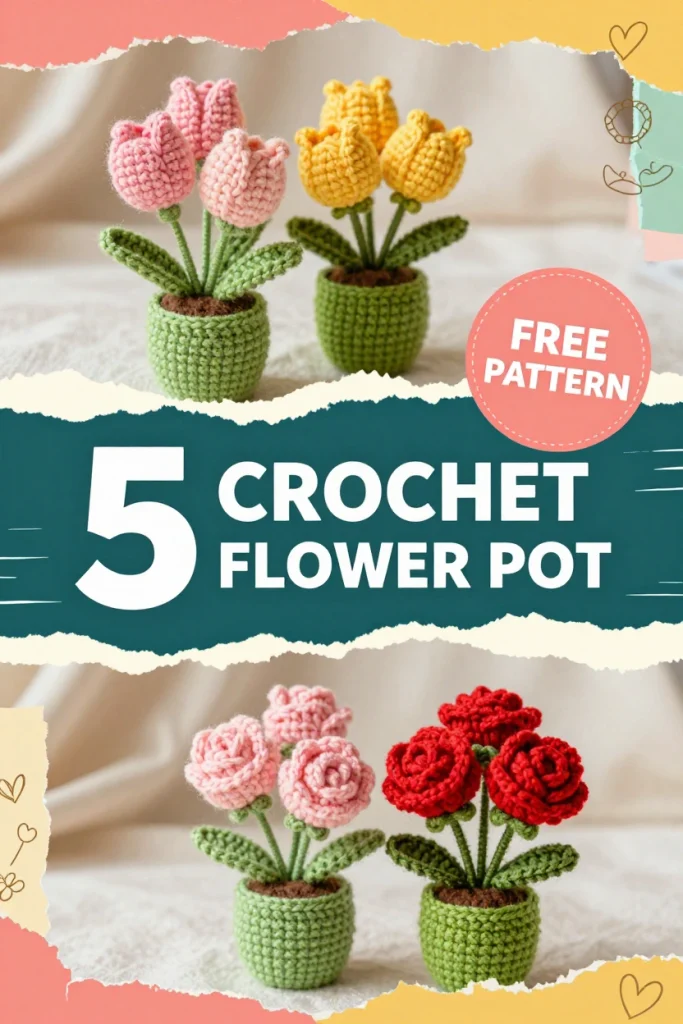
The tulip crochet flower pot is all about the bloom. Here the pot holds a little bouquet of crocheted tulips with slender stems and rounded, cup-shaped petals, often in cheerful shades like red, yellow, pink, or purple. Tulips are loved for their simple, graceful shape, so this idea feels like a spring garden you can keep on your table all year. It is different from the earlier ideas because the flowers, not the pot, are the star of the show.
How to Style It Display it near the entrance of your home or on a dining table to greet guests with a burst of color. A mix of two or three tulip colors in the same pot looks lively, while a single color gives a calm, polished finish.
Good to Know Crocheted tulips never wilt, never need water, and never trigger sneezes, which makes them a thoughtful gift for people who love flowers but cannot keep a garden. They are also a lovely springtime decoration that stays fresh long after real tulips fade.
Lily Valley Flowers
Lily of the valley is a tiny, delicate flower known for its little bell-shaped blossoms hanging along a slim green stem. A crocheted version in a small pot captures that dainty beauty in a very charming way. Expect soft white bells, fresh green leaves, and an overall look that feels graceful and refined. This idea is the most delicate of the five, and it suits anyone who enjoys small, detailed handmade work.
How to Style It Because the flowers are petite, give them a spot where they can be admired up close, such as a desk, a nightstand, or a small shelf. A tiny pot with a few stems looks elegant beside a framed photo or a candle.
Good to Know Lily of the valley has long been associated with spring and with gentle, heartfelt wishes, so a crocheted version makes a meaningful keepsake for celebrations like weddings and new beginnings. As a crochet project, small flowers like these are also a great way to use up leftover yarn.
General Tips
1. Choose the Right Yarn for the Look You Want
Cotton yarn tends to give pot covers a firm, neat shape and a matte, natural look, while softer yarns create a fluffier, cozier feel. Think about where the pot will live. A kitchen windowsill suits easy-to-wipe cotton, while a bedroom shelf can handle something plush. Choosing your yarn first often makes the whole project feel easier and more enjoyable.
2. Keep Real Plants Safe from Moisture
If you plan to use a crochet cover over a real plant, remember that damp yarn can stay wet for a long time. A simple solution is to keep the plant in its own plastic or ceramic pot and slip it into the crochet cover, so the cover stays dry and easy to remove. This protects both your work and your plant, and it lets you wash the cover when needed.
3. Avoid the Common Mistake of Rushing the Shape
Many beginners finish the pot quickly and then notice it looks wobbly or too loose. Take a moment to check the size against your actual pot as you go, and adjust before finishing. A snug, well-shaped pot looks far more polished than one that slumps. If you are making flowers, work them in the same yarn weight so everything looks balanced together.
FAQs
Can I use a crochet flower pot with a real plant?
Yes, you can. The safest way is to place the real plant in its own plastic or ceramic container and then set that container inside the crochet pot. This keeps the yarn from getting soaked and helps the cover last longer. Many people also love using crocheted flowers instead, since they need no care at all.
Are crochet flower pots good for beginners?
They are a very friendly project for beginners. A simple pot cover is made from basic shapes, and small flowers like tulips or tiny blooms are quick to finish. Start with a plain, light-colored idea such as the white or light pot, then move on to the flower-focused designs as you get more comfortable.
What can I do with a crochet flower pot once it is finished?
There are plenty of options. Use it as a table centerpiece, a windowsill decoration, a desk accessory, or a handmade gift. It also works nicely as seasonal decor, with pastel pots for spring and warmer shades for the cozy months. A finished piece can even be a small gift to brighten a loved one’s day.
Conclusion
A crochet flower pot is a simple way to bring color, warmth, and a personal handmade feeling into your home. From the sweet glow of a pink pot to the airy calm of a light one, the timeless elegance of a white pot, the cheerful spring look of tulips, and the dainty charm of lily of the valley, there is something here for every style and every skill level. Pick the idea that speaks to you, gather your yarn, and enjoy making a little corner of your home bloom. Once you finish your first pot, you may find it hard to stop at just one.